
Last updated October 15, 2026
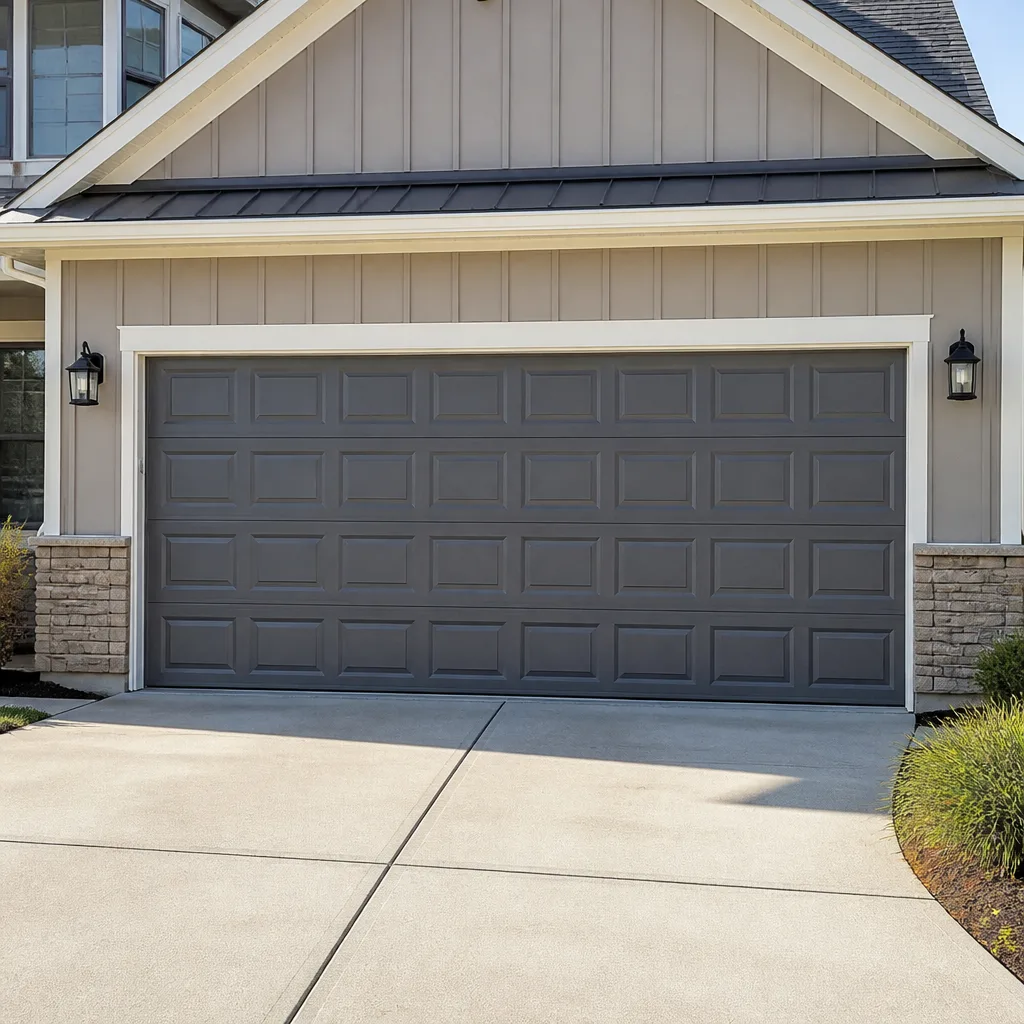 Raised-panel steel
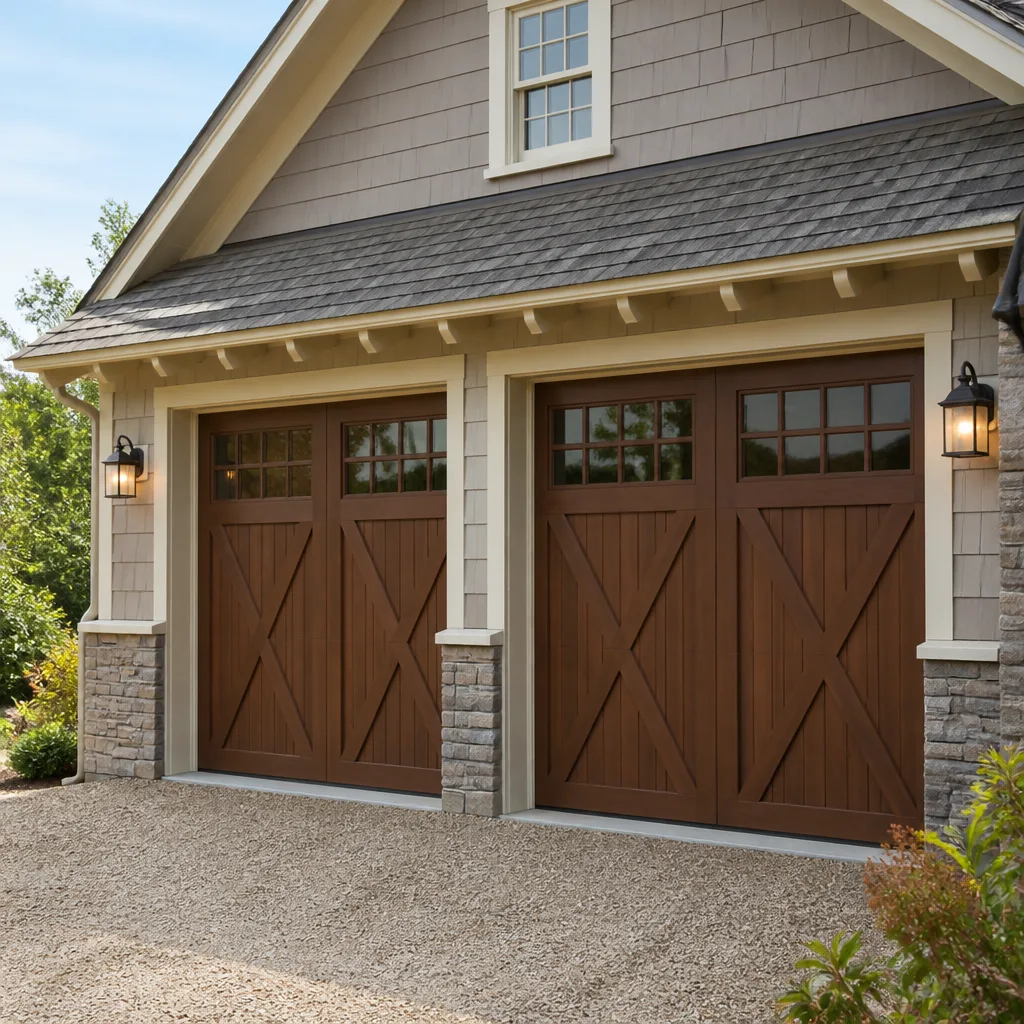 Carriage house
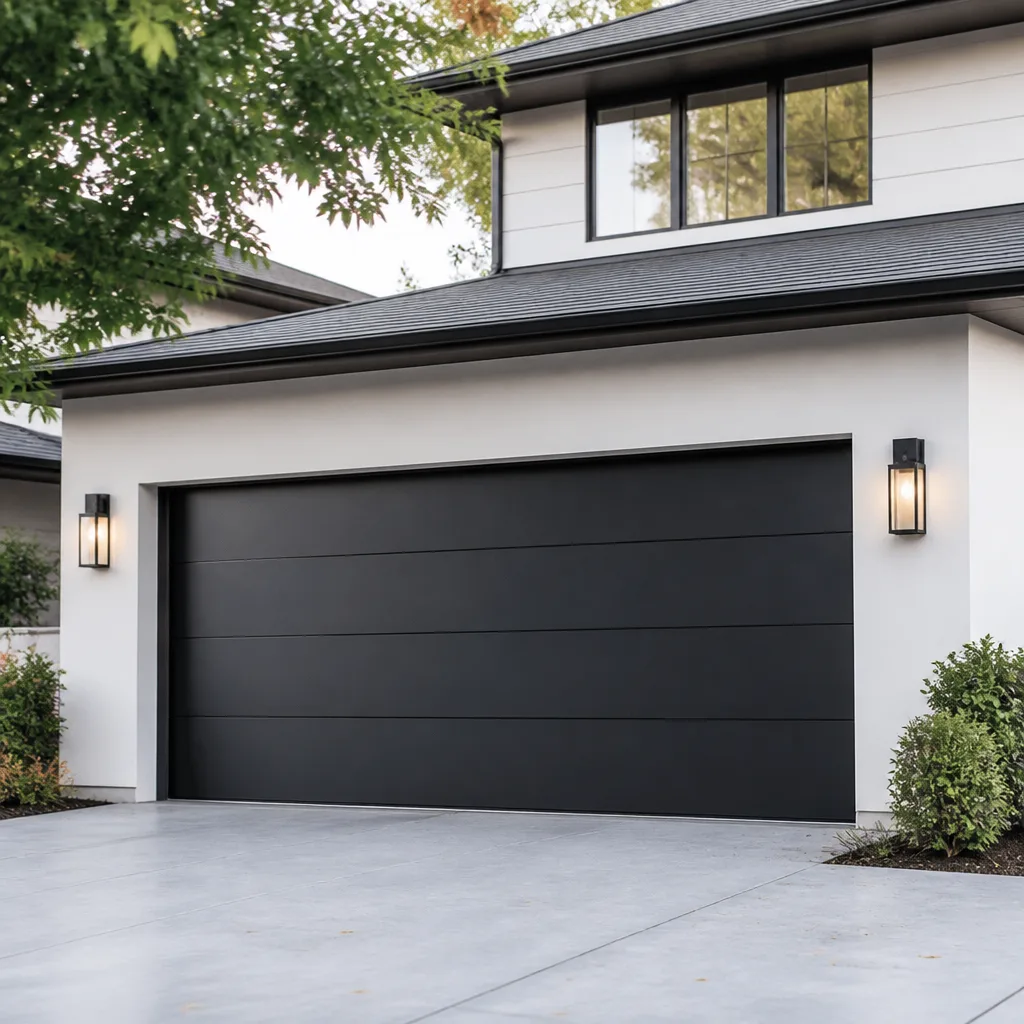 Modern flush
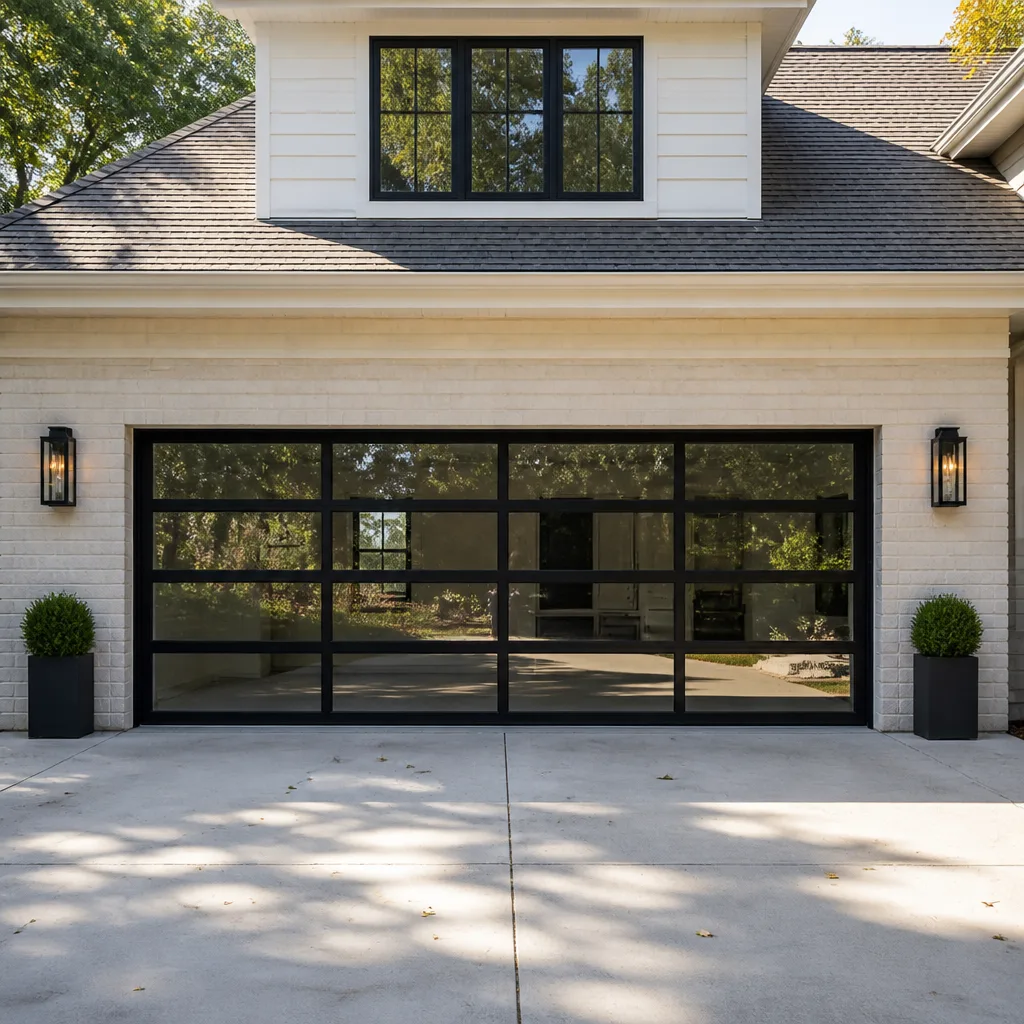 Full-view glass
 LiftMaster openers
 Chamberlain openers
Full 25-point door and opener safety check with every visit - springs, cables, rollers, tracks, and your LiftMaster or Chamberlain opener included
You get a price before we start. It does not change when the truck arrives.
Get your free estimateSeasonal Garage Door Care for Los Angeles: Year-Round Homeowner’s Guide
Los Angeles doesn’t have four seasons in the traditional sense. It has a wet season, a heat season, a fire-and-wind season, and a marine-layer season, and each one stresses a different component of your garage door system in ways a four-season calendar completely misses. The Diablo and Santa Ana wind events that sweep through Los Angeles every fall generate enough grit and debris to clog garage door tracks and foul safety sensors in a single afternoon, yet almost no seasonal care guide mentions them. This guide covers what actually happens to garage doors in Los Angeles, month by month and microclimate by microclimate, so you can stay ahead of the wear instead of calling for emergency repairs after the fact. For a deeper dive, see The Complete Guide to Garage Door in Los Angeles.
Styles & brands we work with
Quick Answer
Seasonal garage door care in Los Angeles means four things: clean the tracks and check sensor alignment after every Santa Ana wind event in fall, inspect the bottom seal before and during the November-through-March rainy season, test spring tension and balance each spring before summer heat accelerates metal fatigue, and keep the opener motor and dark door panels from cooking in direct Valley sun all summer. A 15-minute quarterly check, timed to LA’s actual weather patterns rather than a generic calendar, prevents most of the failures we see on service calls across the city.
Table of Contents
- Fall and Santa Ana Season: The Grit That Kills Tracks and Sensors
- Winter Wet Season: What Standing Water Does to Seals and Floor Plates
- Spring: The Smart Window for Spring Tension Inspection
- Summer Heat Season: Opener Motors, Dark Panels, and Valley Temperatures
- Marine Layer Season: Coastal Moisture and Corrosion
- The 15-Minute Quarterly Check for LA Homeowners
- Common Mistakes to Avoid
- When to Call a Professional
- Frequently Asked Questions
- The Bottom Line
Fall and Santa Ana Season: The Grit That Kills Tracks and Sensors
Between September and November, the Santa Ana winds push dry desert air through the passes and canyons into Los Angeles. Those winds carry fine dust, sand, and leaf debris that settles into places you’d never think to check. Garage door tracks are a perfect catch basin. After a single strong wind event in neighborhoods like Porter Ranch, Granada Hills, or anywhere along the 118 corridor, the vertical tracks on either side of your door can accumulate enough grit to make the rollers grind.
The safety sensors, those small photo-eye units mounted about six inches off the ground on each side of the door opening, are even more vulnerable. When debris blows into the sensor lens or nudges the mounting bracket even a quarter inch out of alignment, the door refuses to close, or worse, reverses mid-cycle. The sensor sends an invisible beam between the two units, and if that beam breaks, the opener assumes something is in the way. Most homeowners in Los Angeles who call us in October and November with a door that won’t close are dealing with a sensor issue, not a mechanical failure.
Fall Care Steps
- After any significant wind event, run a dry rag along the inside of both vertical tracks to remove grit. Don’t use grease here. Grease attracts dirt and makes the problem worse. Dry tracks are clean tracks.
- Wipe the sensor lenses with a soft, dry cloth. Check that both sensors point directly at each other. Most units have a small indicator light that glows steadily when aligned.
- Inspect the rubber weather seal along the bottom of the door. Before the first rains arrive, look for cracks, flattening, or gaps where the seal meets the concrete. A failing seal in October becomes a water intrusion problem by December.
- Test the door balance manually by pulling the release handle, usually a red cord hanging from the opener rail, and lifting the door by hand. It should move smoothly without sticking and stay put halfway up. If it slams down or feels heavy, the springs are losing tension.
One thing we’ve learned from thousands of service calls in Los Angeles is that a door that works fine in the spring can bind suddenly in the fall because the weather stripping swells or the tracks shift slightly with temperature swings. A five-minute visual check in October catches most of it.
Winter Wet Season: What Standing Water Does to Seals and Floor Plates
The Los Angeles rainy season runs roughly November through March, and when it rains here, it often rains hard. Driveways in older neighborhoods like Echo Park, Silver Lake, and the flatlands of Long Beach pitch toward the garage, which means storm water runs directly at the door. The bottom seal, a flexible rubber or vinyl strip attached to the bottom edge of the door, is the only thing keeping that water outside.
Here’s what happens over the course of a single rainy season in a low-grade LA driveway. Water pools against the bottom seal. The seal, already compressed from years of closing against concrete, develops small cracks. Water seeps through, pools inside, and soaks the bottom door panel. Most residential panels are steel with a foam or polystyrene core. Once water gets inside, the steel starts rusting from the inside out. Within two or three winters, the bottom panel shows bubbling paint, rust streaks, or soft spots. We’ve replaced panels in Los Angeles that rusted through entirely because a $25 bottom seal was never replaced.
The floor plate, the strip of concrete under the door, also suffers. Standing water that repeatedly freezes and thaws isn’t much of an issue here, but constant moisture does degrade the concrete surface over time, especially if the driveway wasn’t poured with a proper slope. If you see a visible gap between the seal and the floor when the door is closed, that’s not cosmetic. That’s water entry waiting to happen.
Wet Season Care Steps
- After the first significant rain, close the door and look from inside the garage for daylight under the seal. Any visible gap means water can get in.
- Check the seal for cracks every month from November through March. A replacement bottom seal costs $20 to $50 and takes a professional about 30 minutes to install. Compare that to a replacement bottom panel at several hundred dollars.
- Look for water stains on the inside of the bottom panel and on the garage floor near the door. Stains after rain mean the seal is failing even if it looks fine from outside.
- If water pools against the door from outside, consider a threshold seal, a rubber dam that glues to the concrete under the door, which works with the bottom seal to create a double barrier.
Winter in Los Angeles is also when we see an uptick in opener failures. Moisture finds its way into the opener’s control board or the wall switch wiring, especially in garages that lack ventilation. If your opener starts behaving erratically after a storm, like running when no button is pressed or refusing to respond, moisture is often the culprit.
Spring: The Smart Window for Spring Tension Inspection
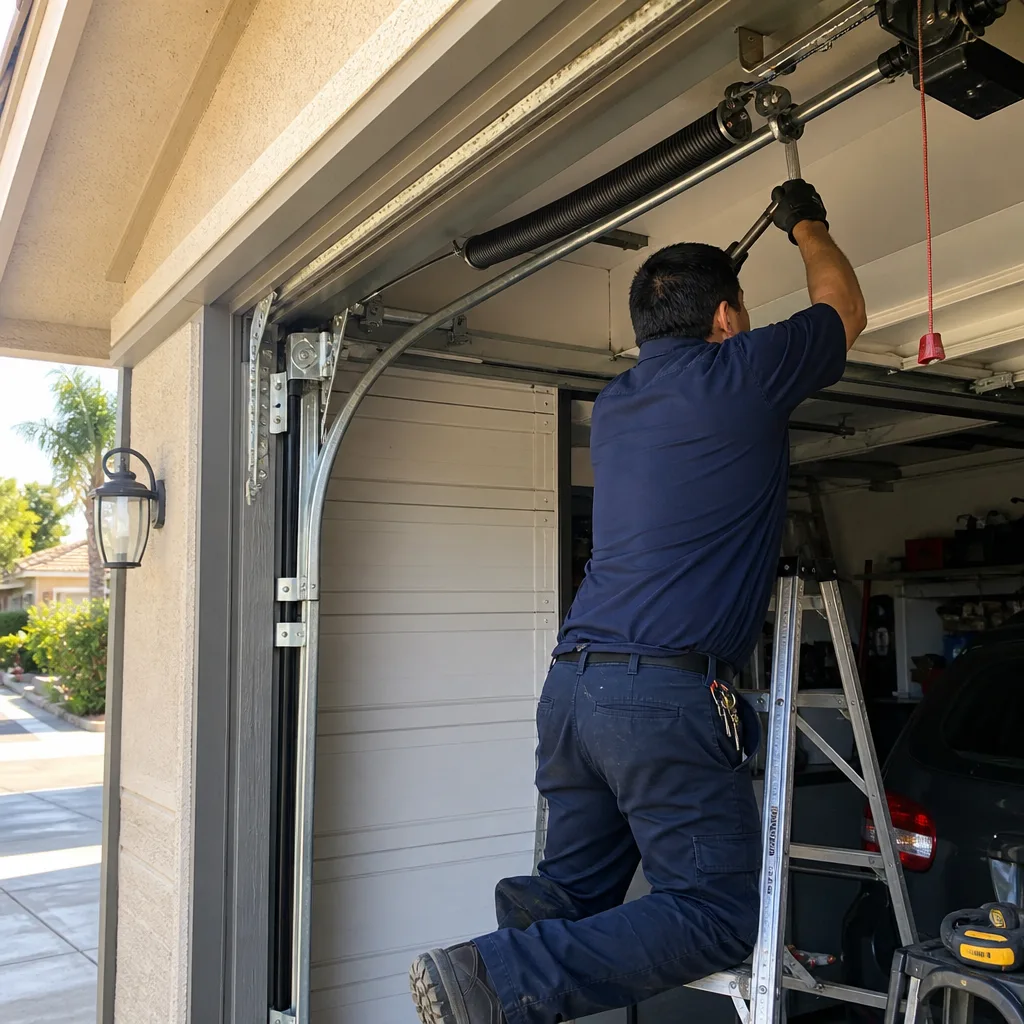
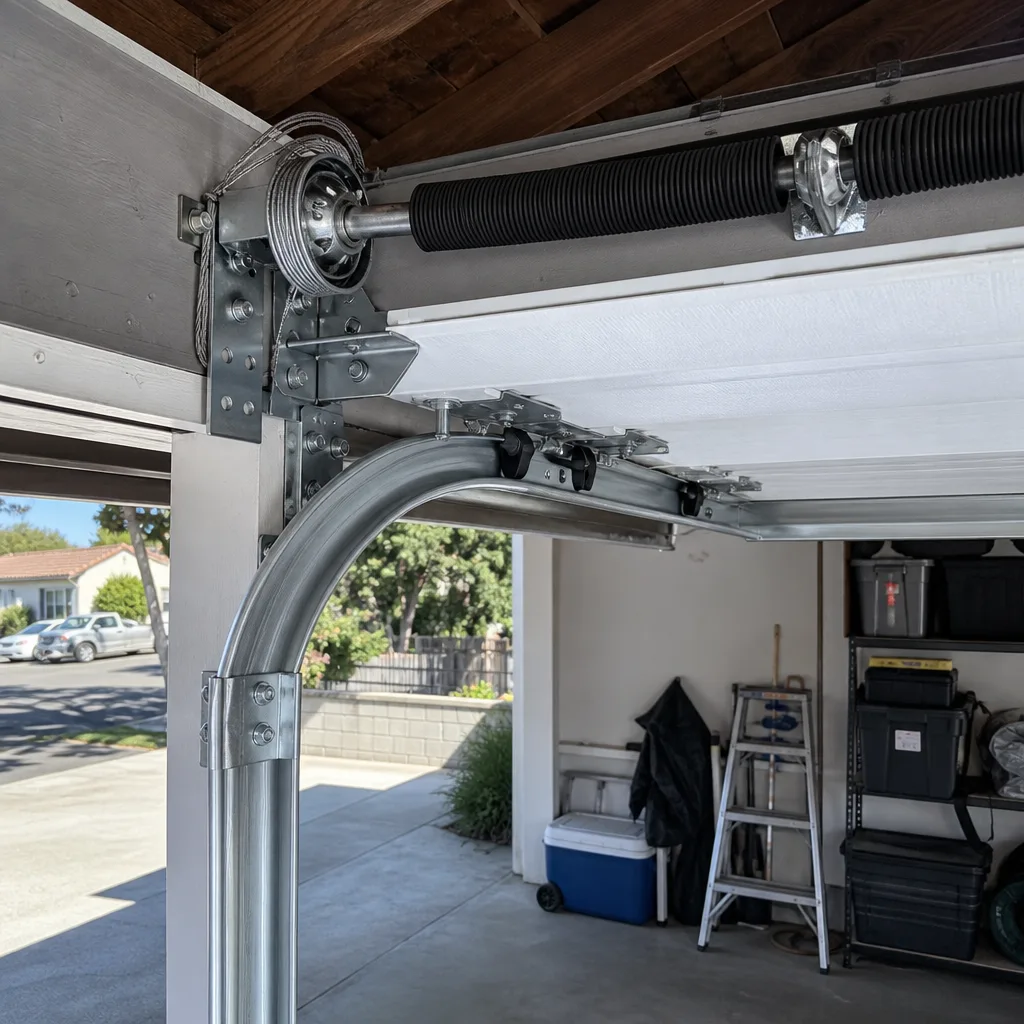
Most garage doors in Los Angeles use either torsion springs, the heavy coils mounted on a metal shaft above the door, or extension springs, the long springs that run parallel to the tracks on either side. Both types do the actual work of lifting the door. The opener just nudges it along. A torsion spring is rated for a specific number of cycles, and one cycle is one full open-and-close. Most standard springs are rated for 10,000 cycles, which translates to roughly seven to ten years of normal use, but LA’s temperature swings shorten that lifespan.
Spring is the right time to inspect spring tension because of what’s coming in summer. Metal fatigues faster in heat. The expansion and contraction cycles that happen daily across a wide temperature range, say a 55-degree morning in March followed by an 85-degree afternoon, create microscopic stress points in the spring steel. By August, a spring that was marginal in April will snap. We replace more broken springs in Los Angeles in July and August than any other time of year, and most of those failures showed warning signs in the spring that went unnoticed.
What to Look For
- Visible gaps or separation in the coils of a torsion spring. A healthy spring has coils that sit tight against each other. A gap means the spring is stretching and near failure.
- Rust or corrosion on spring surfaces. Surface rust accelerates metal fatigue. A spring that looks orange-brown in multiple spots is living on borrowed time.
- Door balance issues. Disconnect the opener with the release handle and lift the door manually. It should move easily and stay in place around waist height. If it drops, the spring is losing tension.
- Uneven movement. If one side of the door rises faster than the other, the springs are unbalanced, which puts extra strain on the opener, the rollers, and the hinges.
A word of caution here. Torsion springs are under enormous stored tension. Never attempt to adjust, remove, or replace one without proper winding bars and training. The spring is under enough load to cause serious injury if it lets go while you’re working on it. Inspect visually, yes. Adjust, no. That’s a job for a trained technician.
If you’re in Los Angeles and notice any of these warning signs in March or April, getting a spring tension inspection before summer is the cheapest insurance you can buy for your garage door system. A garage door spring repair in Los Angeles done proactively costs less than an emergency replacement after a snap.
Summer Heat Season: Opener Motors, Dark Panels, and Valley Temperatures
Summer in the San Fernando Valley routinely pushes past 100 degrees. Woodland Hills, Canoga Park, Chatsworth, and Northridge see some of the hottest sustained temperatures in Los Angeles County. That heat does two things to a garage door system that almost no one plans for: it stresses the opener motor, and it warps dark-colored door panels over time.
Garage door openers have a listed motor temperature rating. Most residential units from LiftMaster, Chamberlain, and Genie are rated for intermittent duty, meaning the motor expects rests between cycles and assumes a reasonable ambient operating temperature. When the garage interior sits at 110 degrees or hotter all afternoon, and then you open and close the door three times in quick succession, the motor’s thermal overload protection can trip. The opener shuts down and won’t respond until it cools off. Homeowners often think the opener is dead when it’s actually just overheated.
Dark door panels, especially charcoal, black, or deep brown steel doors that face south or west, absorb solar radiation all day. Steel expands when heated. Panels that are 16 feet wide can expand enough over repeated heat cycles to develop stress bowing, a permanent outward curve in the middle of a panel. It doesn’t happen in one summer. It takes three to five years of exposure, but once a panel warps, it won’t straighten back out. The door starts catching at the top of the opening, or develops gaps where wind and dust blow through.
Heat Season Care Steps
- Check the opener motor housing with your hand on a hot afternoon. If it’s too hot to hold for more than a few seconds, the opener is working hard. Give it rest between cycles.
- If your garage door faces south or west and you’re considering a new door, think about a lighter color. A white or light tan panel runs 20 to 30 degrees cooler on the surface than a dark panel in direct sun.
- Inspect the panel surfaces for bowing in July and August. Stand inside the garage with the door closed and sight down the panel line. Any obvious curve is early warping.
- Keep the garage ventilated. A small vent or just cracking the side door during the hottest hours lowers the ambient temperature, which helps the opener motor and reduces heat load on stored items.
If you’re planning a garage door installation in Los Angeles, summer heat factors into both panel choice and opener selection. A local installer who knows LA microclimates will steer you toward materials and motors that handle sustained heat without failing early.
Marine Layer Season: Coastal Moisture and Corrosion
The neighborhoods along the coast from Santa Monica down through Redondo Beach and up through Malibu live under a marine layer for months at a time. Morning fog, salt air, and consistent humidity create a different set of problems than the dry heat just 15 miles inland. Salt-laden moisture settles on every metal surface in your garage door system and accelerates corrosion.
We see more rusted hinges, corroded roller bearings, and seized lock mechanisms in coastal Los Angeles than anywhere else in the metro area. The salt in the air acts as a catalyst. A bare steel hinge that would last 15 years in Pasadena rusts through in eight years in Mar Vista or Playa del Rey. Rollers with exposed steel bearings grind and skate instead of rolling smoothly. The door gets noisy, then starts binding, then stops moving cleanly altogether.
The fix is regular lubrication with the right product. Use a silicone-based lubricant or white lithium grease on all moving metal parts: hinges, roller stems, the lock mechanism, and the spring coils. Avoid WD-40. It’s a water displacer, not a lubricant, and it actually strips existing lubrication and attracts dirt. For coastal homes, lubricate every two months during the marine layer season, which in Los Angeles runs roughly May through July and then again in September and October.
Coastal Care Steps
- Every two months, apply a thin coat of silicone lubricant to all hinge pivot points, roller bearings, and the spring coils.
- Check for rust spots on the door tracks and hardware. Early surface rust can be wiped down and treated. Deep rust means replacement parts.
- Inspect the door’s exterior surface for paint bubbling or blistering, which indicates salt intrusion into the steel. Catching it early means a repaint rather than a panel replacement.
- Test the manual lock, if your door has one, every few months. Coastal locks seize up faster than inland ones, and a seized lock can prevent the door from opening at all.
The 15-Minute Quarterly Check for LA Homeowners
Annual care calendars make sense in climates with a hard freeze and a defined spring thaw. Los Angeles doesn’t work that way. The weather patterns shift every few months, and different components take stress in different seasons. A quarterly rhythm matches how LA actually behaves, and the whole check takes about 15 minutes once you know what you’re looking at.
The Quarterly Check Steps
- Watch one full open-and-close cycle. Stand inside the garage and watch the door move. It should be smooth and quiet. Listen for grinding, popping, or hesitation. These are early warning signs you’ll catch long before a failure if you pay attention.
- Check the balance. Pull the release handle and lift the door manually. It should rise smoothly with one hand and hold position halfway up. A heavy or dropping door means spring issues.
- Clean the tracks. Run a dry cloth along both vertical tracks and the horizontal tracks near the ceiling. Remove any debris. Don’t lubricate the tracks themselves, only the moving parts.
- Wipe the sensors. Clean both photo-eye lenses and confirm the indicator lights show a steady beam. A blinking light means alignment issues.
- Inspect the bottom seal. Look for cracks, flattening, or daylight gaps. Replace if necessary.
- Check visible hardware. Make sure hinge bolts and track brackets are tight. Loose hardware causes rattles and accelerated wear.
- Test the auto-reverse. Place a roll of paper towels on the floor under the door’s path and close the door. It should reverse immediately upon contact. This is a safety feature, not a convenience, and it saves fingers and pets.
Schedule these checks for the same week every three months. Many Los Angeles homeowners tie them to daylight saving time changes in March and November, plus mid-summer and mid-winter reminders. The point is consistency, not perfection. A homeowner who does this check four times a year catches 90% of the problems our garage door repair in Los Angeles teams see on emergency calls.
Common Mistakes to Avoid
- Lubricating the tracks. Greasing or oiling the tracks attracts dirt and grit, especially during Santa Ana season in Los Angeles, and turns the track into a grinding compound. Tracks stay dry. Lubrication goes on hinges, rollers, and springs only.
- Ignoring the bottom seal. A $25 seal replacement catches water before it rusts a $400 bottom panel. We see this failure constantly in neighborhoods with older driveways like West Adams and Highland Park.
- Using WD-40 as a lubricant. It’s a solvent, not a lubricant. It strips existing grease and leaves metal surfaces vulnerable. Use silicone spray or white lithium grease.
- Forcing a misaligned sensor back into place by hand. Sensor brackets bend easily, and bending them back often breaks the mounting tab. A loose sensor is a repair job, not a handyman fix.
- Waiting until a spring snaps to address balance issues. A door that feels heavy months before a spring breaks is sending the clearest warning signal a garage door gives. The snap is just the final symptom.
- Assuming a dark door color is only an aesthetic choice. In Los Angeles summers, a dark panel facing west absorbs enough heat to warp over several years. The color choice has structural consequences.
- Skipping the auto-reverse test. The opener’s auto-reverse feature, which reverses the door when it hits something, is legally required and has saved countless kids and pets. Test it quarterly. If it fails, disconnect the opener and call a professional.
When to Call a Professional
Some garage door work is a safe DIY job: wiping sensors, cleaning tracks, tightening visible bolts, testing balance. Other work is genuinely dangerous. Not sure which category your project falls into? Read our DIY vs Professional Garage Door: The Los Angeles Homeowner’s Decision Guide. Torsion springs hold enough stored energy to cause severe injury or death if they release unexpectedly. Never attempt to adjust or replace a torsion spring yourself. The same applies to cables under tension, which can lash out if they snap, and to any repair that requires removing the spring assembly.
Call a professional if your door is off balance and you can’t identify the cause, if a spring shows visible gaps or rust, if the cables look frayed, if the opener behaves erratically, or if the door has come off its tracks. In our experience, these are the failures that escalate from a $150 fix to an $800 replacement when homeowners try to force a fix. Bramwell Garage Doors Los Angeles home offers free estimates throughout Los Angeles. Call (213) 996-0290 and a live person answers, any hour, any day.
Frequently Asked Questions
In Los Angeles, a quarterly visual and functional check is the right rhythm because the climate shifts every few months, each putting stress on different components. A professional inspection once a year, ideally in spring before summer heat arrives, catches deeper mechanical issues. Most garage doors in LA need lubrication every two to three months, more often near the coast where salt air accelerates corrosion.
A standard garage door tune-up in Los Angeles typically runs $75 to $150, including lube, hardware tightening, sensor cleaning, and a balance test. A bottom seal replacement adds $25 to $50 in parts plus a short labor charge. A torsion spring replacement, the most common major repair, usually costs $150 to $280 including parts and labor. See our Garage Door Cost Breakdown: The Los Angeles Homeowner’s Reference for 2026 for full details. Exact pricing depends on door size and spring type. Call (213) 996-0290 for a written quote before any work starts.
Yes, most garage door repairs in Los Angeles can be completed the same day if the issue is a snapped spring, a broken cable, a misaligned sensor, or a failed opener component. Garage door spring repair in Los Angeles is one of the most common same-day repairs because a door with a broken spring won’t open at all. Call (213) 996-0290 and a live person answers 24/7 to schedule a technician.
No, and this is where the Kingswell Guarantee matters. The written price you receive is the price you pay, quoted before any work starts. The invoice matches the spoken quote, every time, on every job. If the technician finds additional problems during the repair, they stop and present a new written price before proceeding. You’ll never get hit with a surprise bill after the work is done.
Yes. Bramwell technicians in Los Angeles carry the most common replacement parts on every truck: torsion springs in multiple sizes, extension springs, cables, rollers, sensors, hinges, and opener components. We service all major brands including LiftMaster, Chamberlain, Genie, and Clopay, so in most cases we can complete a repair in one visit. If a specialty part isn’t in stock, we quote a timeline before leaving the driveway.
Sensor misalignment after fall wind events is the most common seasonal issue we fix in Los Angeles. Santa Ana winds blow debris into sensor lenses and knock brackets out of alignment, which causes the door to refuse closing or reverse mid-cycle. The second most common is spring failure during summer heat, when metal fatigue accelerates and springs that were marginal in spring finally let go. Both are preventable with seasonal checks.
The Bottom Line
Los Angeles weather doesn’t ask your garage door for permission. It hits in cycles: grit from fall winds, standing water from winter storms, metal fatigue from spring-to-summer heat, and coastal corrosion from the marine layer. Each season targets a different component, and each failure is predictable if you know what to watch. A 15-minute quarterly check, timed to how LA actually behaves, prevents most of the expensive repairs we see. Explore more guides & resources to keep your door running smoothly year-round. When something does go wrong, the fix should be honest, priced up front, and guaranteed in writing. That’s how we run every job at Bramwell Garage Doors Los Angeles, and it’s how we’ve done it since 2001.
Written by Marcus Ellery, Owner at Bramwell Garage Doors Los Angeles, serving Los Angeles since 2001.
See the difference
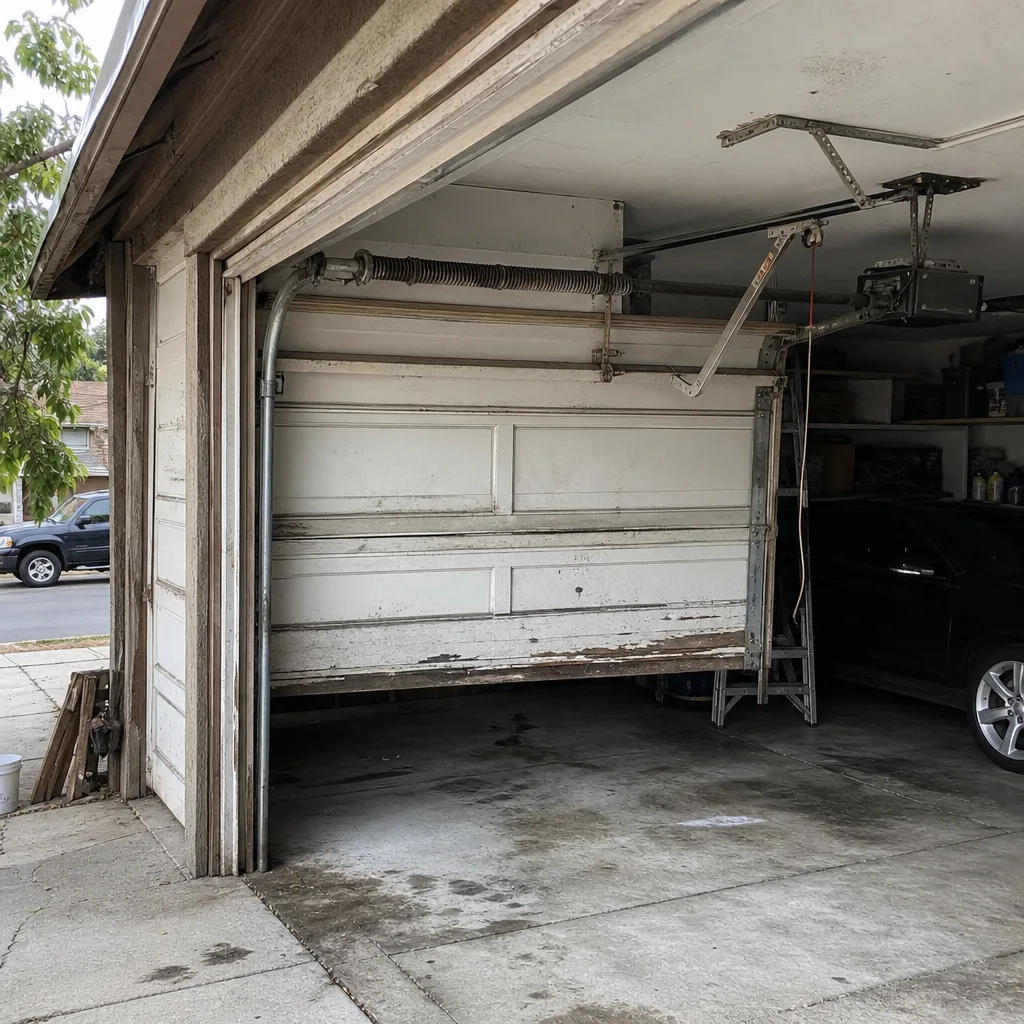 Before
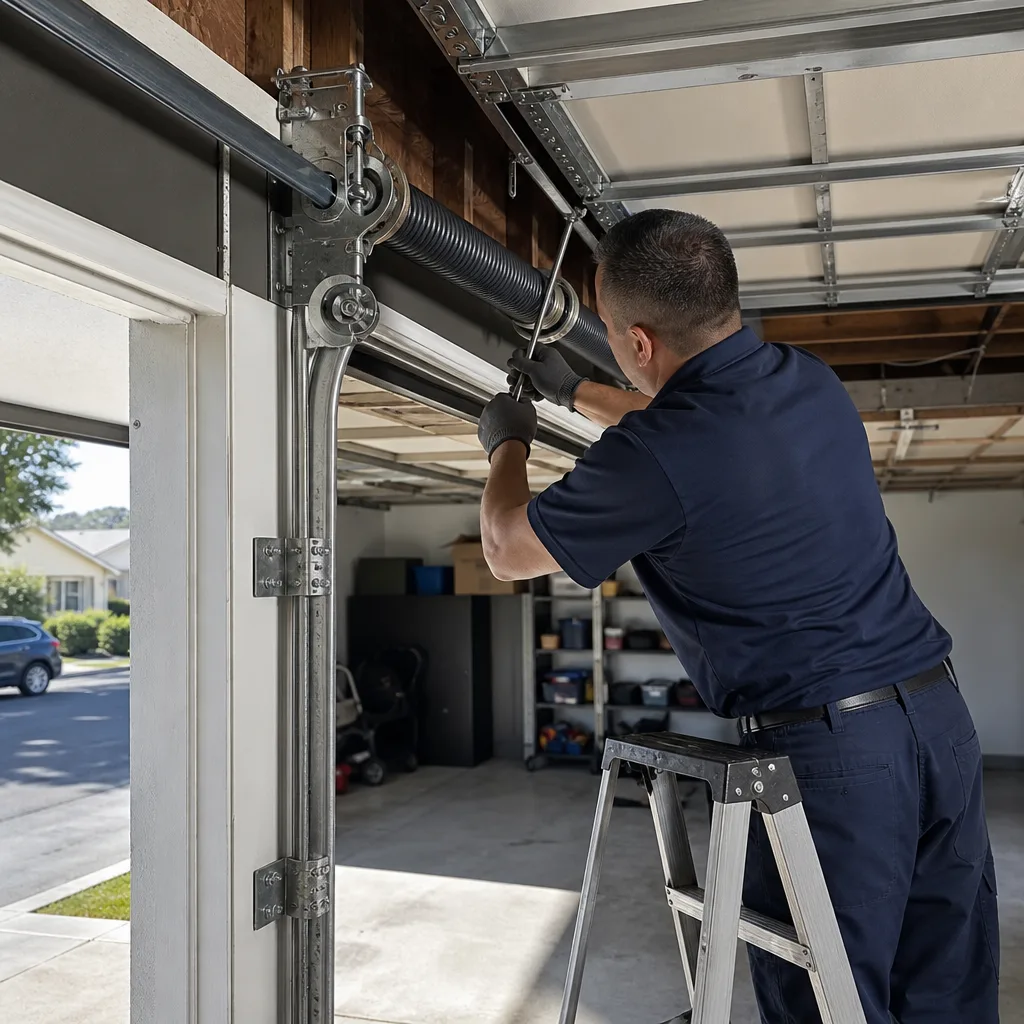 After
After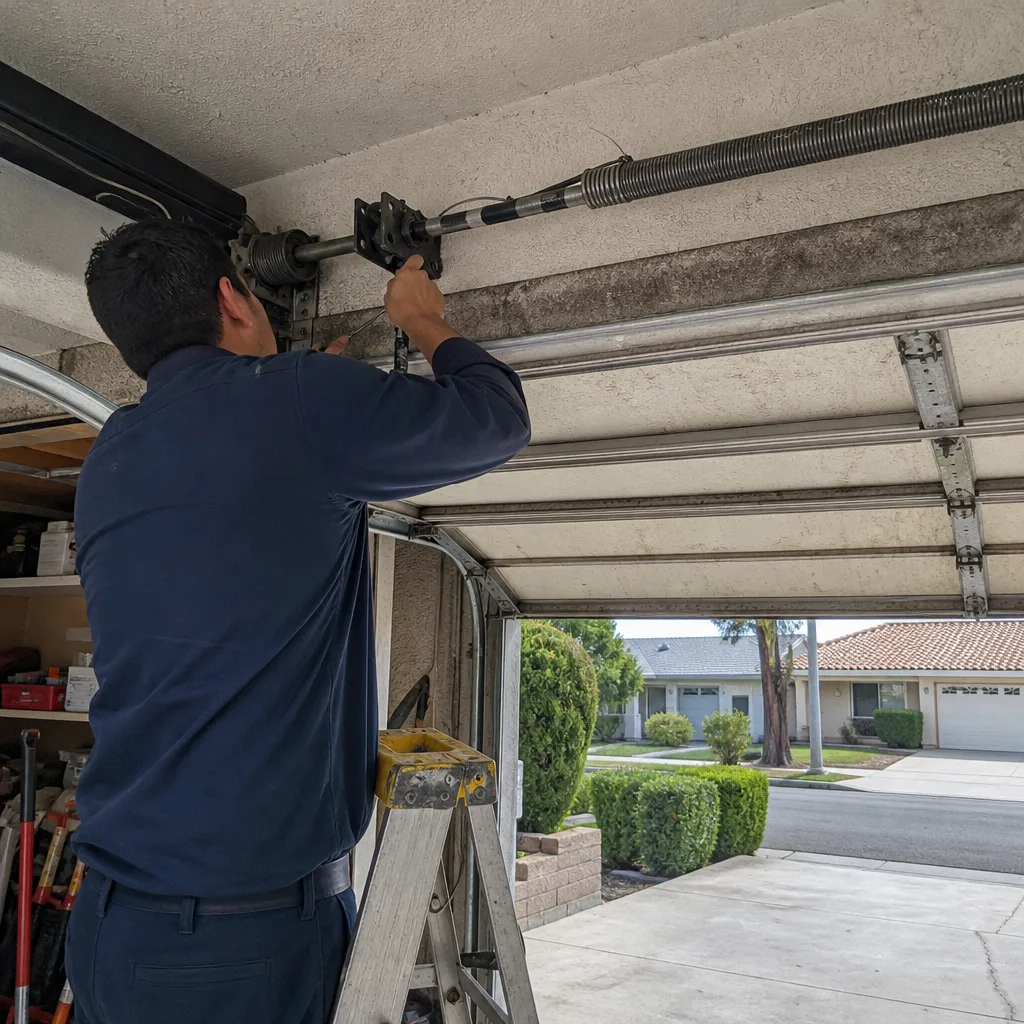 Before
 After
After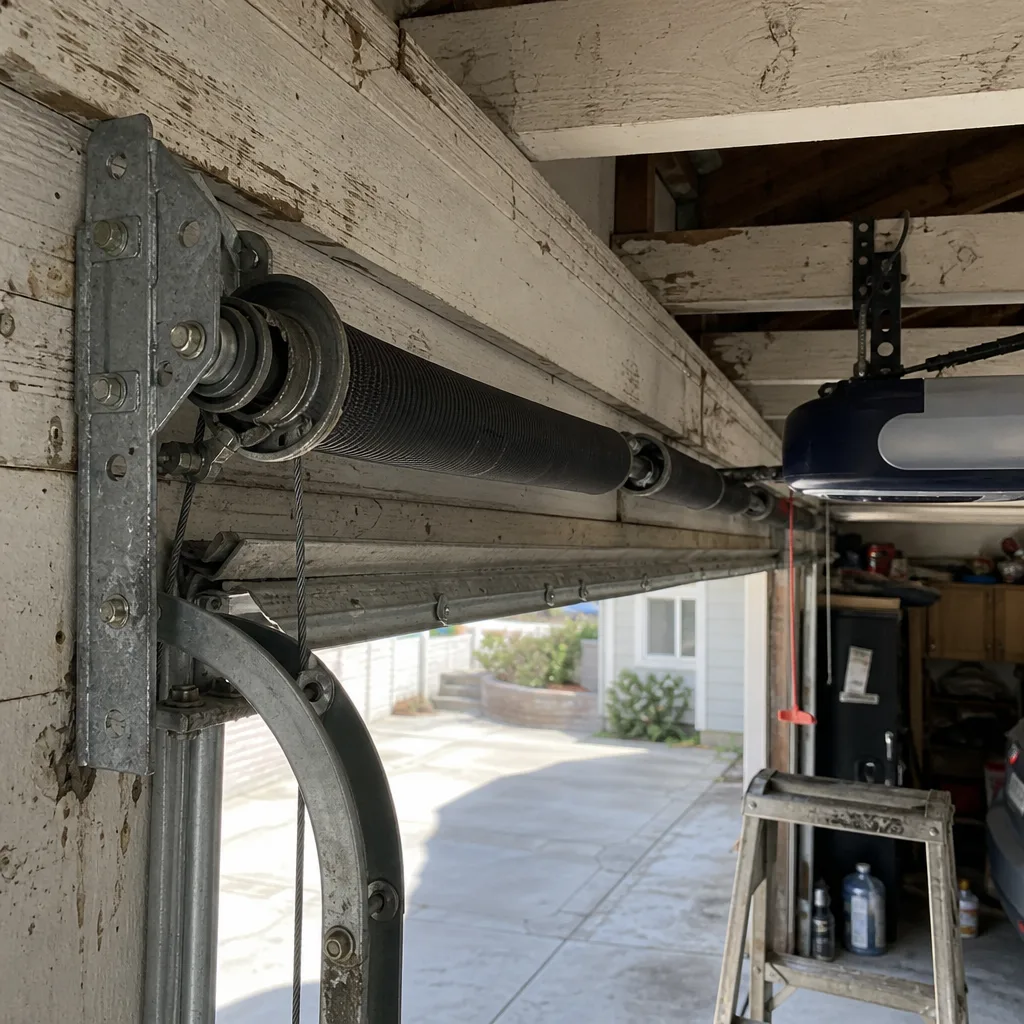 Before
 After
After