
Last updated October 15, 2026
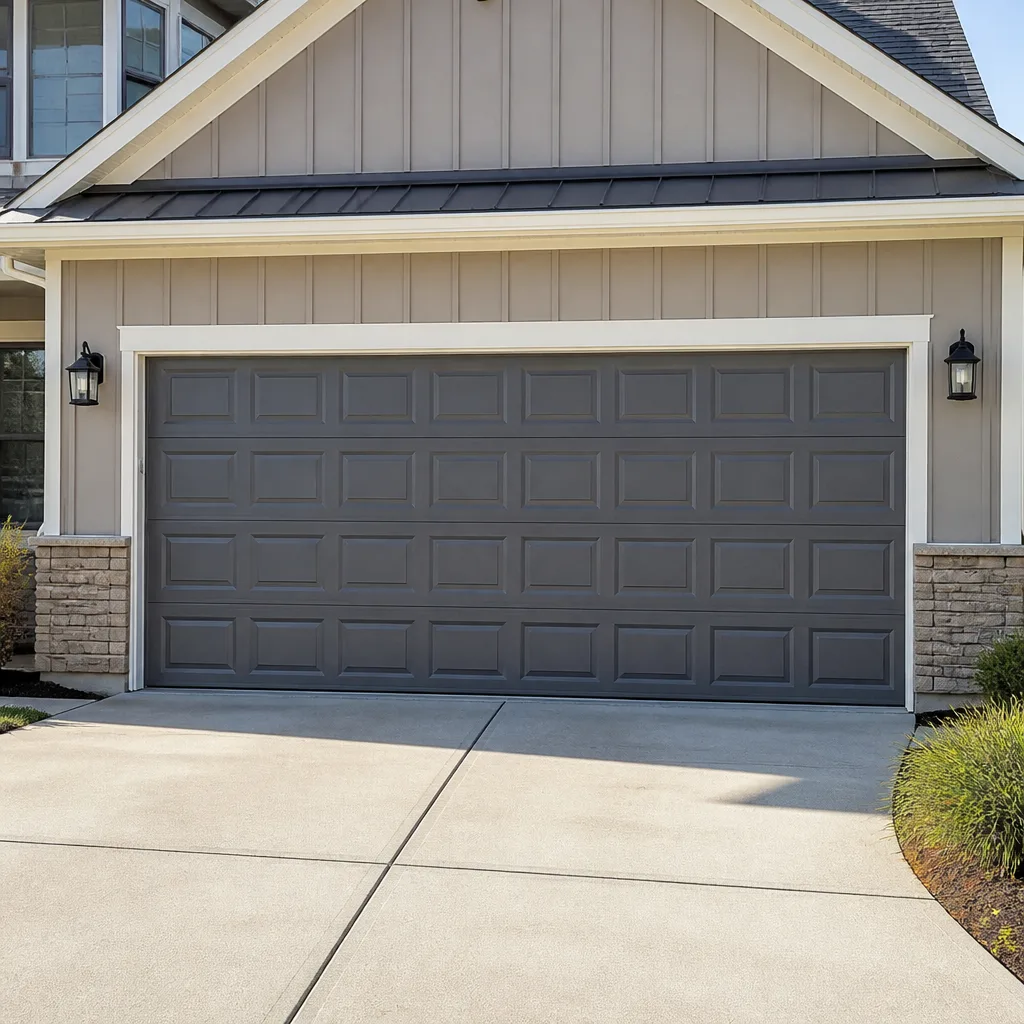 Raised-panel steel
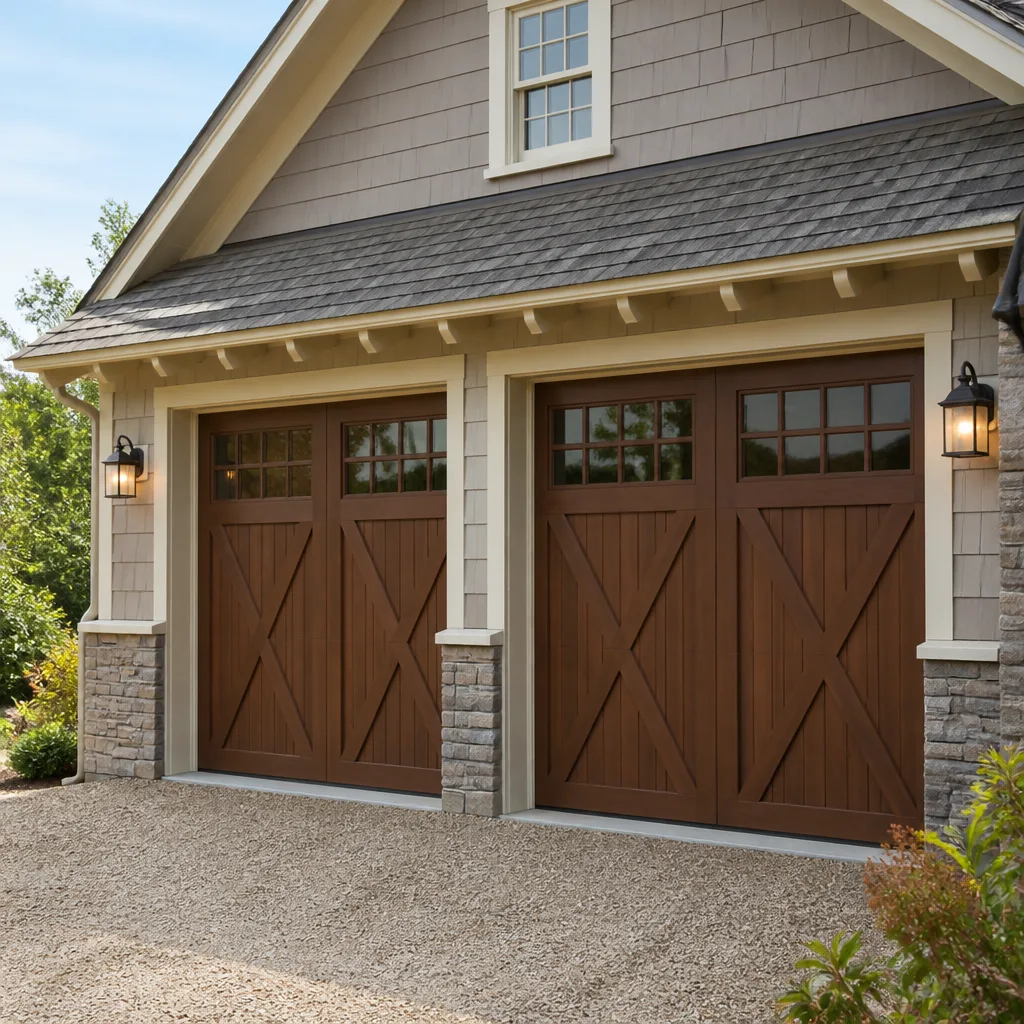 Carriage house
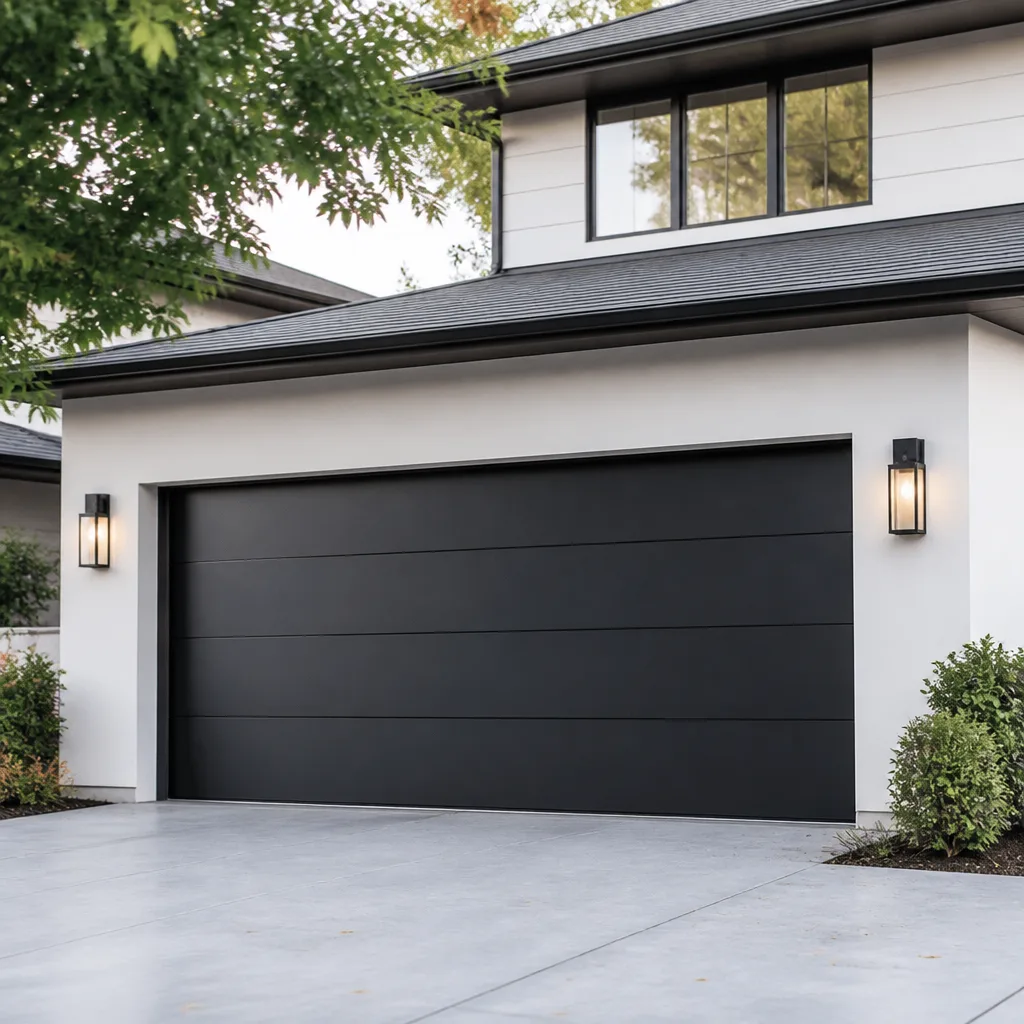 Modern flush
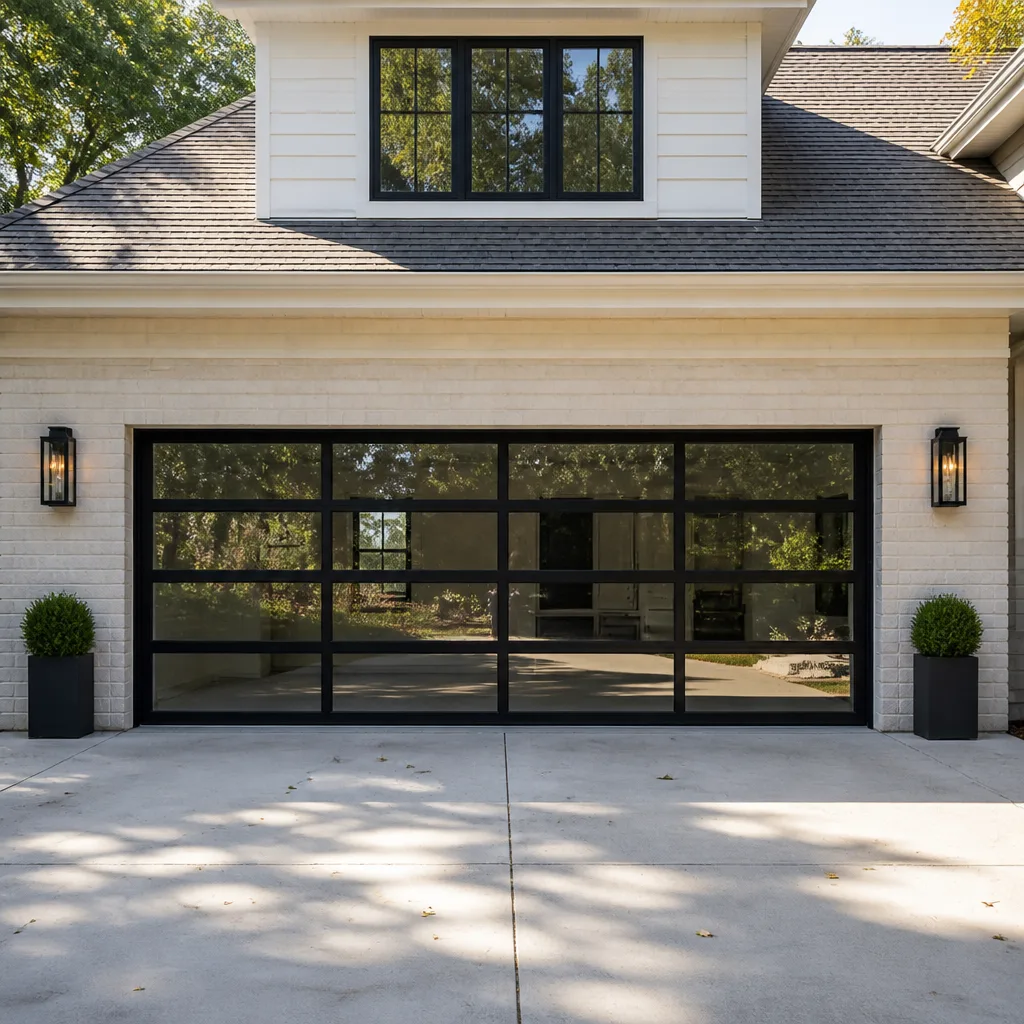 Full-view glass
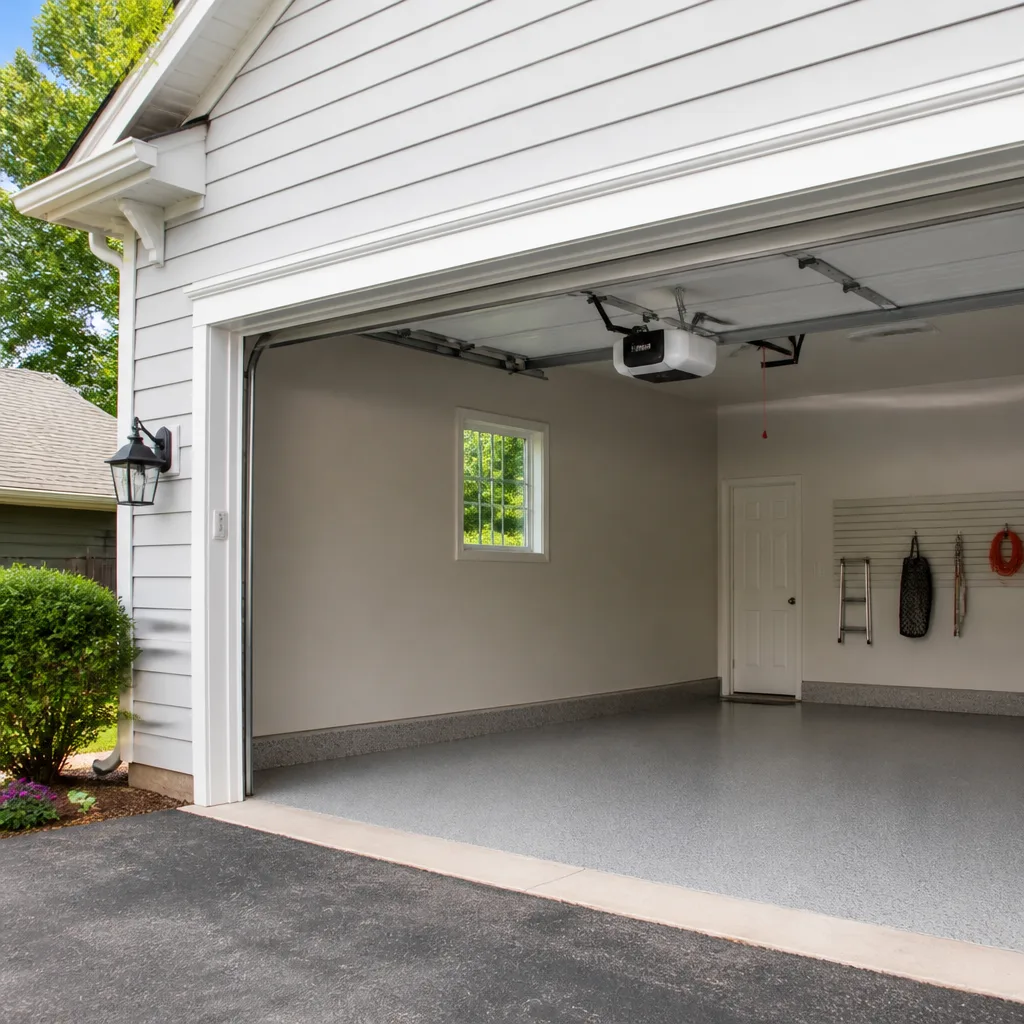 LiftMaster openers
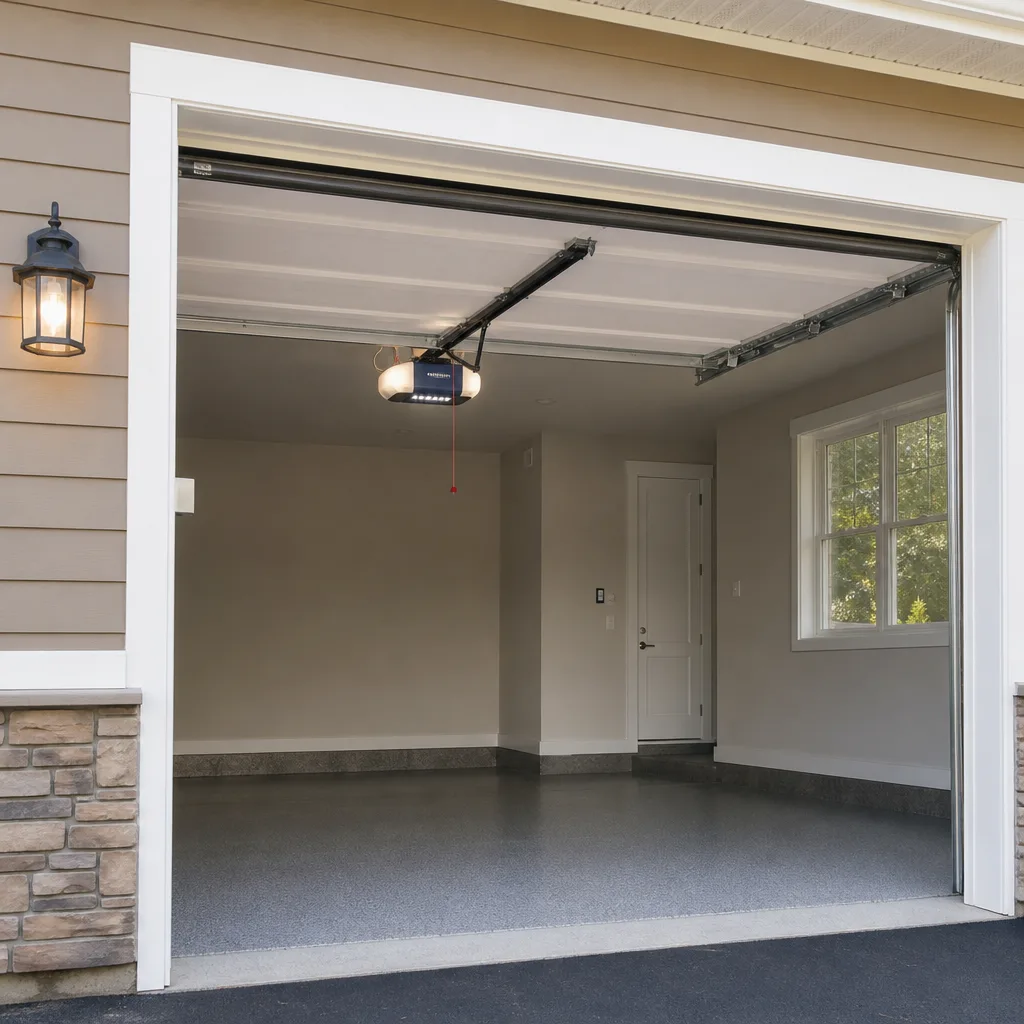 Chamberlain openers
Full 25-point door and opener safety check with every visit - springs, cables, rollers, tracks, and your LiftMaster or Chamberlain opener included
You get a price before we start. It does not change when the truck arrives.
Get your free estimateGarage Door Warning Signs: A Los Angeles Homeowner’s Reference Guide
Most garage doors in Los Angeles don’t fail without warning. They telegraph trouble for weeks, sometimes months, before the moment you’re late for work and the door won’t open at all. A door that’s suddenly “a little slow” isn’t aging gracefully. It’s often a torsion spring that’s lost tension and is making your opener motor work hard enough to shorten its life by months. We’ve put together this reference guide so Los Angeles homeowners can read the signs early, know what they’re looking at, and understand how urgent the fix actually is. For a deeper dive, see our Complete Guide to Garage Door in Los Angeles. Some of these warnings are “keep an eye on it.” A few demand same-day attention.
Quick Answer
A garage door that moves slowly, jerks while opening, makes a loud bang from inside the garage, shows frayed cables, or doesn’t sit evenly on the floor is sending you a specific warning about a specific component. Most fixes cost between $95 and $340 in Los Angeles. The two signs that demand immediate attention are a loud bang followed by a door that won’t budge (broken torsion spring) and visible cable fraying with separated strands (snapped cable risk). Both are dangerous to operate and should stop you from using the door until a technician arrives.
Styles & brands we work with
Table of Contents
- The Garage Door That Moves Too Slowly
- The Door That Jerks, Shudders, or Bounces
- The Loud Bang: A Broken Torsion Spring
- Reading Cable Fraying: What’s Dangerous vs. What’s Wear
- The Uneven Door Gap at the Floor
- Older LA Homes and the Single-Spring Problem
- Signs Los Angeles Homeowners Most Often Misread
The Garage Door That Moves Too Slowly
A garage door that takes noticeably longer to open than it did six months ago is one of the most common early warnings. In our experience across Los Angeles, this is the sign homeowners dismiss most often because the change is gradual. You notice it one day and think the door has always been that slow. It hasn’t.
The most frequent cause in Los Angeles homes is torsion spring tension loss. The torsion spring is the heavy coil mounted above the door that handles most of the lifting weight. Your opener motor was sized to move a door that the springs make feel light. When a spring starts losing tension, the door gets heavier, and the motor works harder. You’ll notice the door taking 10 seconds to open instead of 7. The motor sounds strained. It may even stop partway and reverse.
Why does this matter beyond the inconvenience? Because every week you run a door with a weakened spring, you’re burning months off the opener motor’s lifespan. A replacement opener for a standard two-car door in Los Angeles typically runs $275 – $450 installed. The spring replacement that would have prevented the damage runs $150 – $280. The slow door is a warning that’s cheaper to address early.
What to look for:
- The door takes more than 10 seconds to open from fully closed to fully open.
- You hear a straining, humming sound from the opener that wasn’t there before.
- The door pauses or hesitates partway up, then continues.
- The opener’s plastic gears show black dust below the unit (a sign of excessive load).
One honest note: not every slow door is a spring problem. Worn rollers, a dry track, or an opener motor that’s simply reached the end of its life can also cause slow operation. But the pattern matters. A door that got slower over months without any change in sound is typically a spring. A door that got slower and noisier at the same time is typically rollers or the motor itself. If you’re not sure, a technician who takes five minutes to run a spring tension test will be. At Bramwell Garage Doors Los Angeles, that diagnostic is part of every visit, and you’ll get a written price before any repair work starts.
The Door That Jerks, Shudders, or Bounces
Where a slow door points to a spring problem, a door that jerks, shudders, or bounces as it travels points to a different set of issues entirely. The most common culprits in Los Angeles garages are worn rollers, a bent or misaligned track, or loose hardware that’s allowing the door to shift side to side.
Think of it this way: your garage door rides on a track system that’s only as smooth as its weakest part. Metal rollers that have been turning for 10 or 15 years develop flat spots and lose their bearings. When a flat-spotted roller hits a section of track, the whole door shudders for a second, then continues. You can usually hear it: a rhythmic thumping as the door moves, like a washing machine with an unbalanced load.
Los Angeles has a specific factor here that other cities don’t deal with as much: seismic settling. Houses that have been through a few earthquake cycles can shift enough to throw a garage door track out of alignment by fractions of an inch. That small shift changes how the rollers sit in the track, and the door starts to fight itself. In neighborhoods like Sherman Oaks, Studio City, and the older parts of Pasadena, we regularly see track misalignment on homes where the foundation has settled or shifted after seismic activity.
Here’s how to tell what you’re dealing with before a technician arrives:
- Watch the door with the opener cover removed. If the jerking is rhythmic and repeats at the same point every cycle, suspect a flat-spotted roller.
- Look at the track bolts. Loose bolts will show a small gap between the track and the mounting bracket, often with visible rust or movement.
- Listen for a grinding sound. A low grind usually means metal-on-metal contact: either a roller that’s seized up or a track that’s pinching the roller path.
- Check the cable tension. A door that jerks to one side while moving may have one cable that’s looser than the other.
Cost expectations in Los Angeles: replacing a full set of rollers runs $95 – $150 including parts and labor. Track realignment typically runs $100 – $200 depending on how far things have moved. These are common, same-day repairs. The more you run a jerking door, the more you accelerate wear on every other moving part, including the springs. It’s a repair that compounds.
The Loud Bang: A Broken Torsion Spring
If you’ve ever heard what sounds like a car backfiring or a heavy object falling inside your garage, you may have experienced a torsion spring breaking. It’s loud because that spring is under enormous tension, holding hundreds of pounds of force. When it fails, all that energy releases at once.
This is not a “schedule it when convenient” problem. This is a same-day safety issue.
Here’s why. A standard sectional garage door can weigh between 150 and 400 pounds. The torsion spring system exists to offset that weight so a person, or a small electric motor, can lift the door safely. When one spring on a two-spring system breaks, the remaining spring is suddenly carrying twice its designed load. It will fail too, usually sooner rather than later. When both springs are gone, that door becomes dead weight. If the opener is still connected and someone hits the button, the opener will attempt to lift a door it was never designed to lift by itself. Gears strip. Cables snap. And a door that’s partway up can come down hard.
We’ve seen the aftermath in Los Angeles garages where a homeowner kept using the door after a spring broke. The most common damage is a bent top panel where the opener kept pulling on an unassisted load. The repair cost for a bent panel usually exceeds $400. The spring replacement that would have prevented it would have run $180 – $280 for the typical Los Angeles homeowner.
What to check after you hear a bang:
- Look at the torsion tube above the closed door. A visible two-inch gap in the coil means a spring has separated.
- Try to lift the door manually with the opener released. If it feels like 200 pounds of dead weight, the spring is gone.
- Listen for a click from the opener when you press the wall button. A door that won’t move despite the opener running is a classic broken-spring symptom.
If you suspect a broken spring, stop using the door. Don’t try to operate it manually. Don’t try to replace the spring yourself. The tension involved in winding a torsion spring is genuinely dangerous. A properly trained technician uses specific winding bars and follows a precise procedure. This is one of the repairs where the cost of doing it wrong is measured in hospital visits. Most garage door spring repair in Los Angeles is completed same-day, and a typical two-spring replacement on a two-car door runs $220 – $340 parts and labor included. If you’re in this situation right now, call a company that gives you an arrival window and a written price before any work starts. That’s how Bramwell runs every spring job.
Reading Cable Fraying: What’s Dangerous vs. What’s Wear
Garage door cables are the twisted steel lines that run from the bottom brackets of your door up to the torsion tube or extension spring system. They work together with the springs, and when they fail, the door can come down unevenly or drop entirely. That’s why they’re worth a monthly glance.
The challenge for most homeowners is that not all fraying is created equal. There’s a meaningful difference between surface rust and real cable strand separation.
Surface rust and light oxidation. If you see brownish discoloration on the cable but the individual wires are still tight and uniform, the cable is cosmetically worn but structurally intact. This is common in Los Angeles garages within a few miles of the coast, where salt air accelerates corrosion. Santa Monica, Venice, Marina del Rey, and Long Beach garages see this more than inland neighborhoods. Surface rust is a “watch it” condition. You can slow it with a light application of garage-door lubricant, but you should inspect the cable monthly.
Visible strand separation, or “birdcaging.” If you can see individual wires poking out from the main cable body, or if the cable looks like it’s unraveling in a section, that’s a different situation entirely. This is structural damage. A frayed cable with separated strands is holding tension through fewer wires than it was designed to use. Each cycle of the door stresses those remaining strands further. When a cable fails, it fails suddenly, and the door can drop on one side. If your car is underneath when that happens, the repair bill is for more than a cable.
Here’s the rule we tell Los Angeles homeowners: if the cable looks fuzzy, call someone. If you can count individual loose wires, stop using the door and call someone today. The cost to replace a set of cables in Los Angeles typically runs $130 – $220 including parts, labor, and a door balance check. That’s one of the least expensive major repairs, and it’s one of the easiest to prevent by catching it early.
One more thing worth noting: on doors with exposed extension springs (the ones that run along the horizontal track above your head, common on older Los Angeles homes), a safety cable should run through the center of each spring. If that safety cable is missing and a spring breaks, the spring can fly across the garage with enough force to cause serious injury. If you have an older door and you don’t see a cable running through the spring’s center, mention it to your technician.
The Uneven Door Gap at the Floor
Walk out to your closed garage door and look at the gap between the bottom of the door and the concrete. In Los Angeles, where most garage floors slope slightly forward for drainage, a small gap at one corner is normal. But a gap that changes over time, or one that lets visible daylight through, deserves a closer look.
There are three common causes for an uneven gap at the floor, and they point to very different repairs.
1. Bottom seal wear. The most common and cheapest to fix. The rubber strip at the bottom of your door degrades over time, especially in the Los Angeles sun. UV exposure hardens and cracks the seal, and eventually sections break away. You’ll notice gaps that follow the door’s movement, and the seal itself will look cracked, flattened, or missing chunks. Replacement runs $75 – $125 in most LA markets. This is the cause about half the time we’re called out for an uneven gap.
2. Foundation settling or slab movement. Older Los Angeles neighborhoods, particularly those built on hillside fill or expansive clay soil, see real slab movement. Homes in Echo Park, Mount Washington, Glassell Park, and parts of the Valley are especially prone to this. If the concrete itself is no longer level, the door will sit properly on its track but the floor won’t meet it evenly. You can check this by placing a level on the garage floor near the door. If the floor is noticeably unlevel, the door isn’t the real problem, and a new seal will only be a partial fix. Some technicians will install a thicker seal or a seal with a built-in “floor-leveling” profile that helps. It’s an adaptation, not a repair, and it typically runs $90 – $150.
3. A genuinely bent panel. If a bottom panel has been hit by a car bumper or has rusted through, the door itself is no longer straight. You’ll see a visible crease, dent, or rust line. A bent bottom panel usually requires replacing that panel or the whole bottom section, which runs $250 – $500 depending on the door brand and size. Clopay and Amarr doors are common in LA, and panel availability is generally good for both.
How to tell which one you have before spending money on a service call: run your hand along the bottom seal with the door closed. If the seal is cracked or collapsed, it’s seal replacement. If the gap follows the floor’s slope and the seal looks fine, it’s a floor issue. If you see physical damage on the door panel, it’s the panel. This simple check will save you from paying for a service call that just confirms what you already know.
Older LA Homes and the Single-Spring Problem
There’s a meaningful difference between how garage door springs fail on homes built before roughly 1990 and how they fail on newer construction. If your Los Angeles home was built in the 1960s, 70s, or 80s, there’s a good chance your garage door originally came with a single torsion spring rather than the two-spring setup that’s standard today.
Here’s why that matters. A single spring on a full-size garage door is carrying the entire lifting load by itself. It works when it’s new. But as it ages, it loses tension gradually. The failure mode on a single-spring system is typically not the loud bang we described earlier. It’s slow, progressive weakening. The door gets heavier. The opener strains. The spring may look intact, with no visible break, but it’s delivering half the lifting force it did when it was installed.
We see this pattern regularly in Los Angeles homes in neighborhoods like Westchester, Ladera Heights, and the postwar tracts in the San Fernando Valley. The homeowner says the door has “always been heavy” or “got slower over a few years.” A spring tension test reveals the truth. The spring isn’t broken; it’s just tired. And a tired spring that’s been overloaded for years eventually breaks, often at the worst possible time.
Modern two-spring systems have a different failure pattern. One spring typically breaks while the other holds. You hear the bang. The door becomes heavy on one side. But the door can still be lifted manually with significant effort. You have time to make a call. You should still treat it as urgent, but the failure is less catastrophic than the single-spring equivalent, where one spring handling the entire load snapping means the door is completely inoperable.
Practical advice for owners of pre-1990 Los Angeles homes: if you have a single-spring door and you haven’t replaced the spring in five or more years, have the tension checked. Many reputable garage door repair companies in Los Angeles will do a spring tension assessment as part of a routine service call. If you do replace, consider converting to a dual-spring setup. The conversion typically runs $260 – $360 and provides a safety redundancy that the original single-spring design never had.
Signs Los Angeles Homeowners Most Often Misread
Through years of service calls across Los Angeles, certain patterns repeat. Here are the warning signs we see misinterpreted most often, and what they actually mean.
The door reverses as soon as it hits the floor, then opens back up. This isn’t a spring problem and it isn’t the motor dying. In most cases it’s a misaligned safety sensor or a limit switch that’s set too sensitive. The bottom limit switch, which tells the opener when the door has fully closed, can drift out of adjustment over time. The fix is usually a simple adjustment, running around $75 – $125. Occasionally it’s a failing sensor that needs replacement, which lands in the $100 – $150 range.
The door opens a few inches and stops. Unless you have a broken spring, this is almost always a balance issue or a track obstruction. A door that’s properly balanced will open partially and hold position. A door that’s out of balance will slip back closed. This is a “call us” situation, and it often tracks back to spring tension or track issues. You can read more about the full range of repair causes on our Los Angeles garage door repair guide.
The opener runs but the door doesn’t move. This is the signature sound of one of three things: a stripped gear inside the opener, a disconnected trolley, or a broken spring. If the opener makes a grinding sound, it’s likely the gear, and opener replacement is usually more cost-effective than gear replacement on units more than 10 years old.
The door is louder than it used to be but still works fine. Noise is a leading indicator. A door that’s gradually getting louder is telling you that rollers, hinges, or the opener’s internal components are wearing. Fixing the noise early is a $95 – $180 job. Waiting until the door fails turns it into a $250 – $450 job.
The remote works intermittently. Intermittent remote failure is usually one of two things: a dying battery (cheap), or a logic board beginning to fail (not cheap). Try replacing the remote battery first. If the problem persists across multiple remotes, the issue is the receiver in the opener motor unit. On older Chamberlain and Genie units, this can mean the opener is nearing the end of its useful life.
What Each Warning Sign Costs to Fix in Los Angeles
Price transparency matters. Here’s what Los Angeles homeowners should expect to pay for the repairs we’ve covered on this page. These are market ranges for the Los Angeles metro area, not national averages, because LA prices run about 10 to 15% higher than the national norm. For maintenance that prevents these costs, see our Seasonal Garage Door Care for Los Angeles: Year-Round Homeowner’s Guide.
- Worn roller replacement (full set): $95 – $150
- Track realignment: $100 – $200
- Bottom seal replacement: $75 – $125
- Cable replacement (set): $130 – $220
- Safety sensor adjustment or replacement: $75 – $150
- Limit switch adjustment: $75 – $125
- Torsion spring replacement (two-spring system): $220 – $340
- Single-to-dual spring conversion: $260 – $360
- Opener motor replacement (installed): $275 – $450
- Bent bottom panel replacement: $250 – $500
Every price on this page assumes parts and labor included. The key thing to insist on regardless of which company you call is that the price is quoted and agreed before any work starts. No exceptions. A company that quotes a price over the phone and changes it at the door is a company to send away. The written-price standard is one of the four Kingswell promises that Bramwell operates under on every job, whether it’s a spring replacement or a full garage door installation in Los Angeles.
See the difference
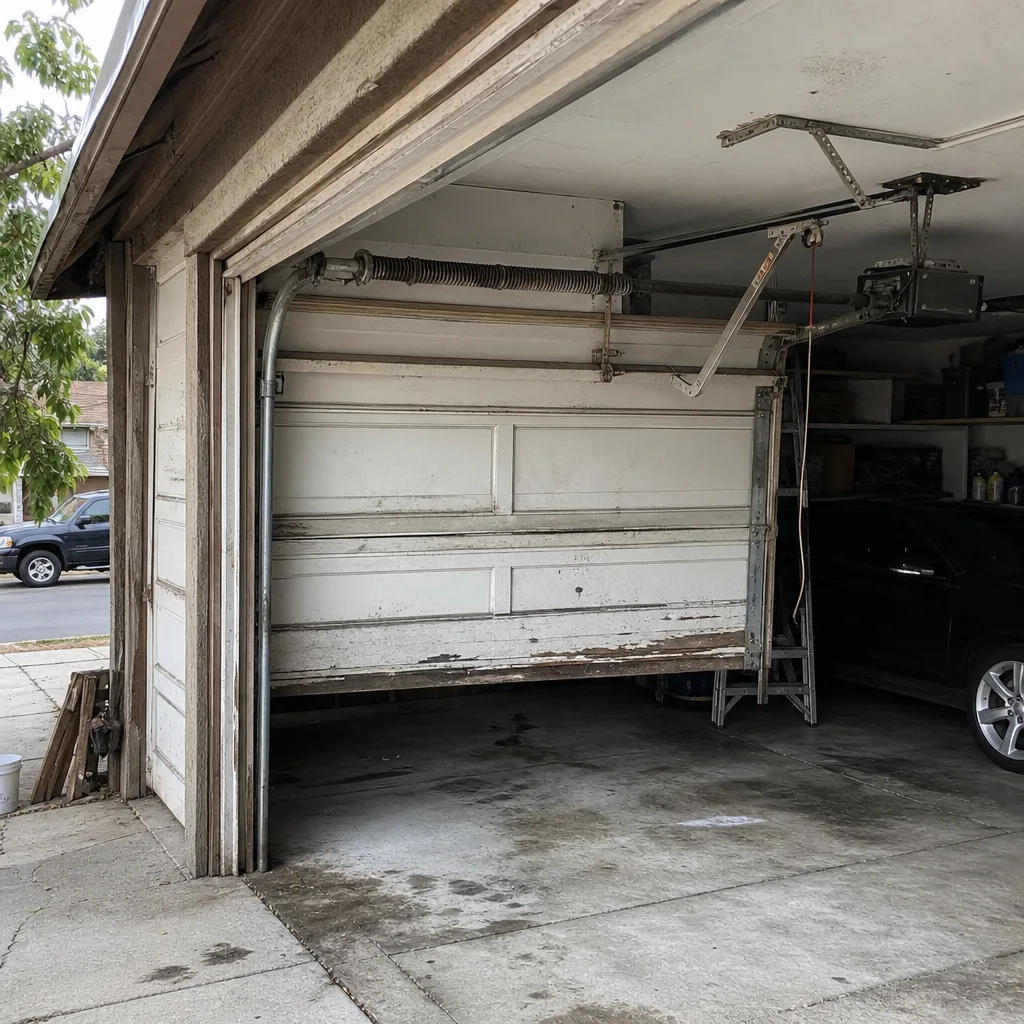 Before
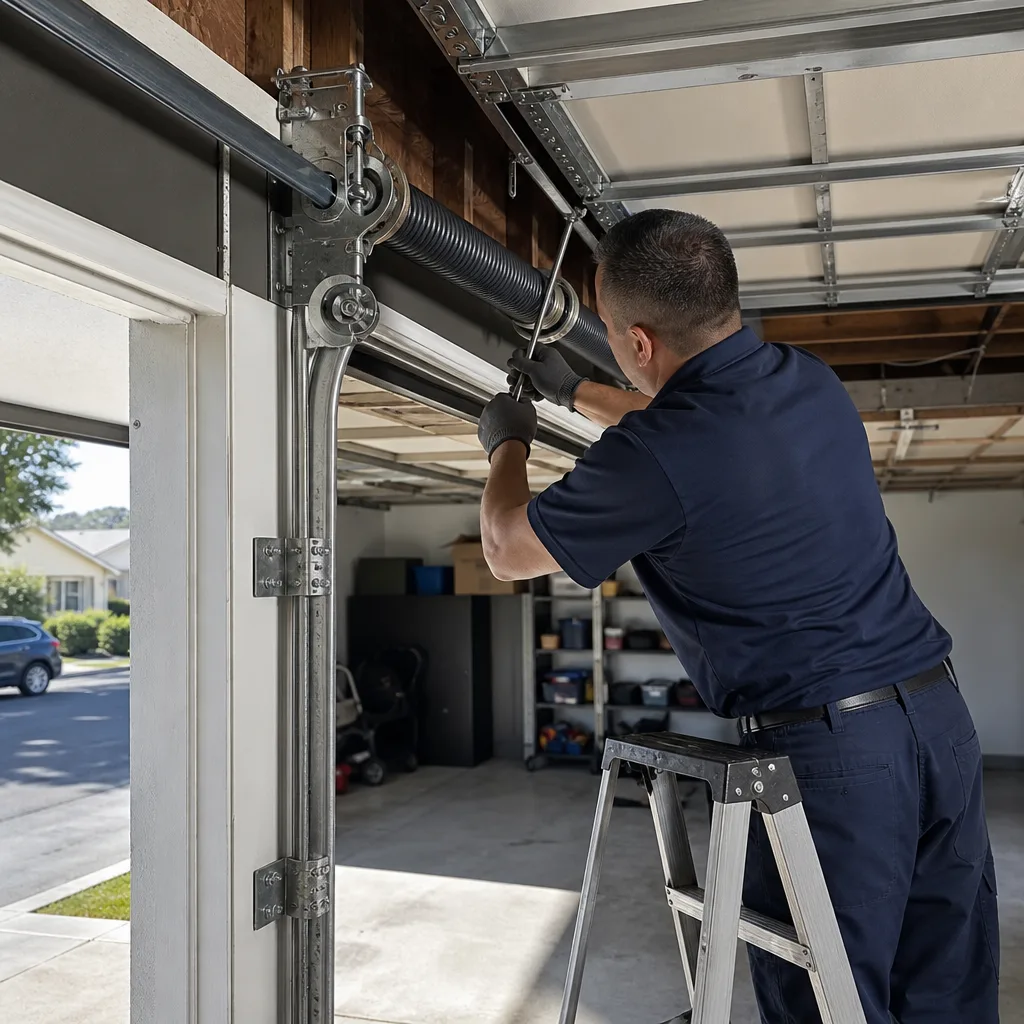 After
After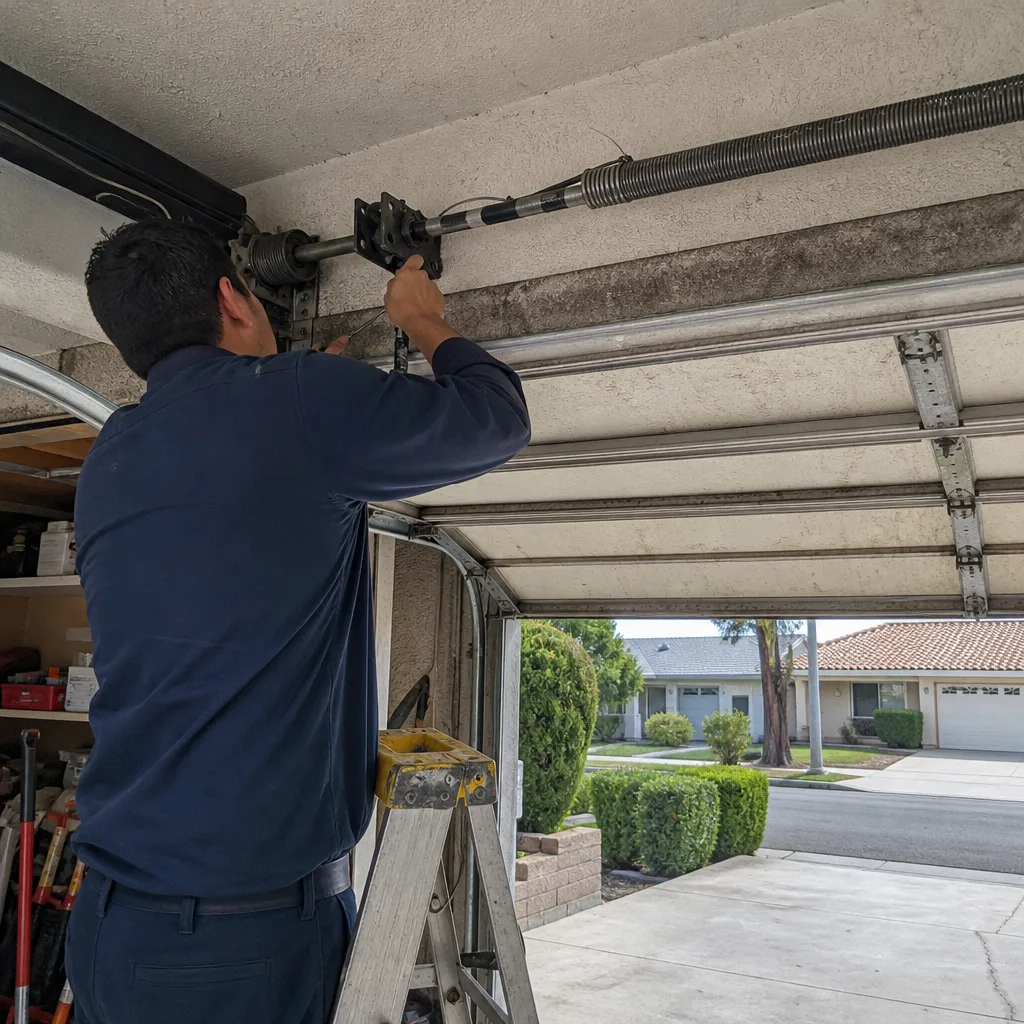 Before
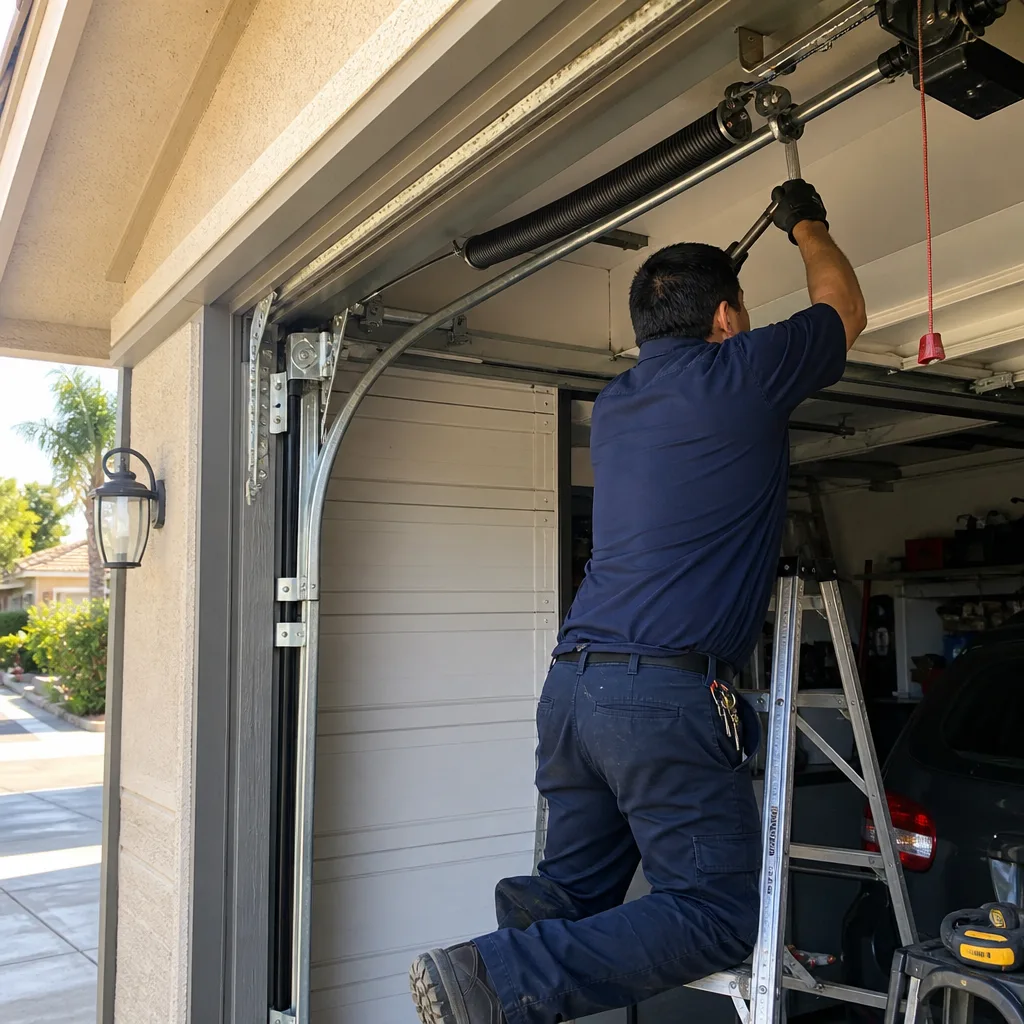 After
After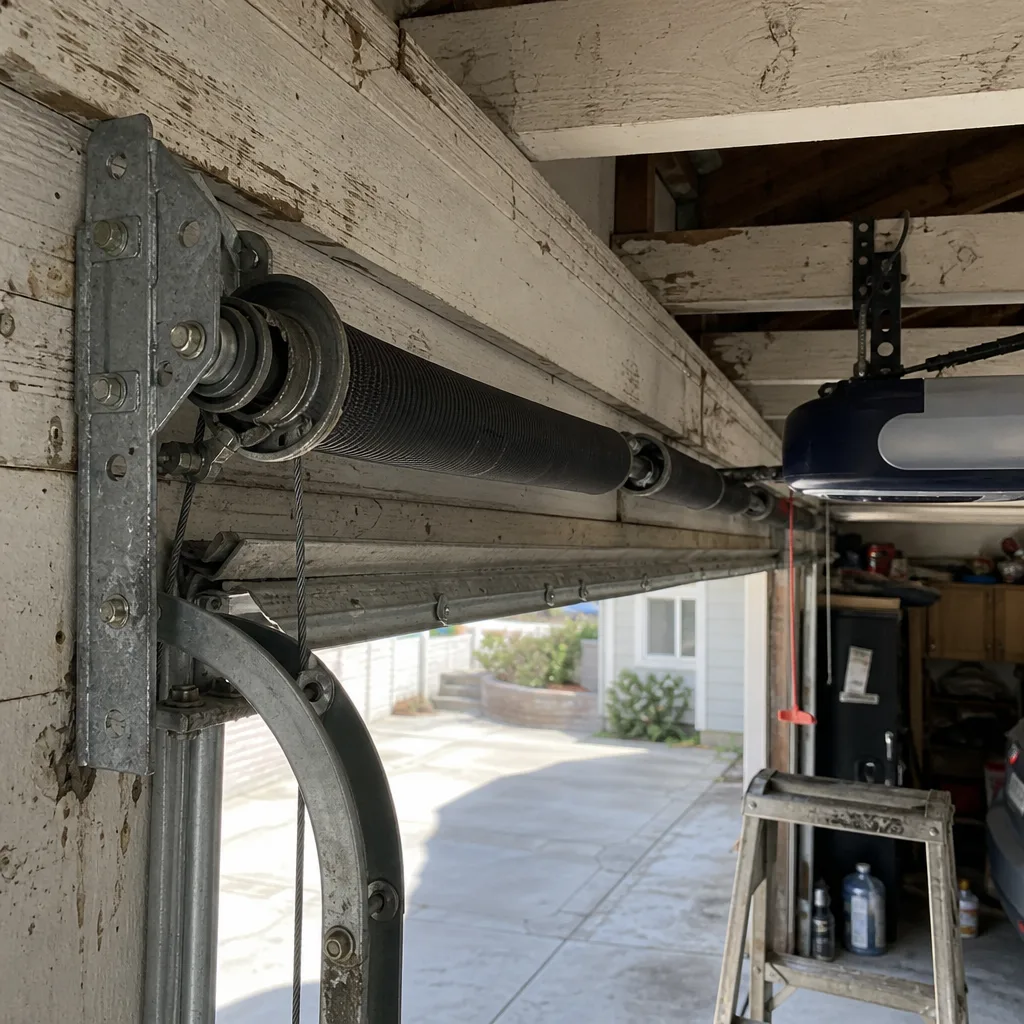 Before
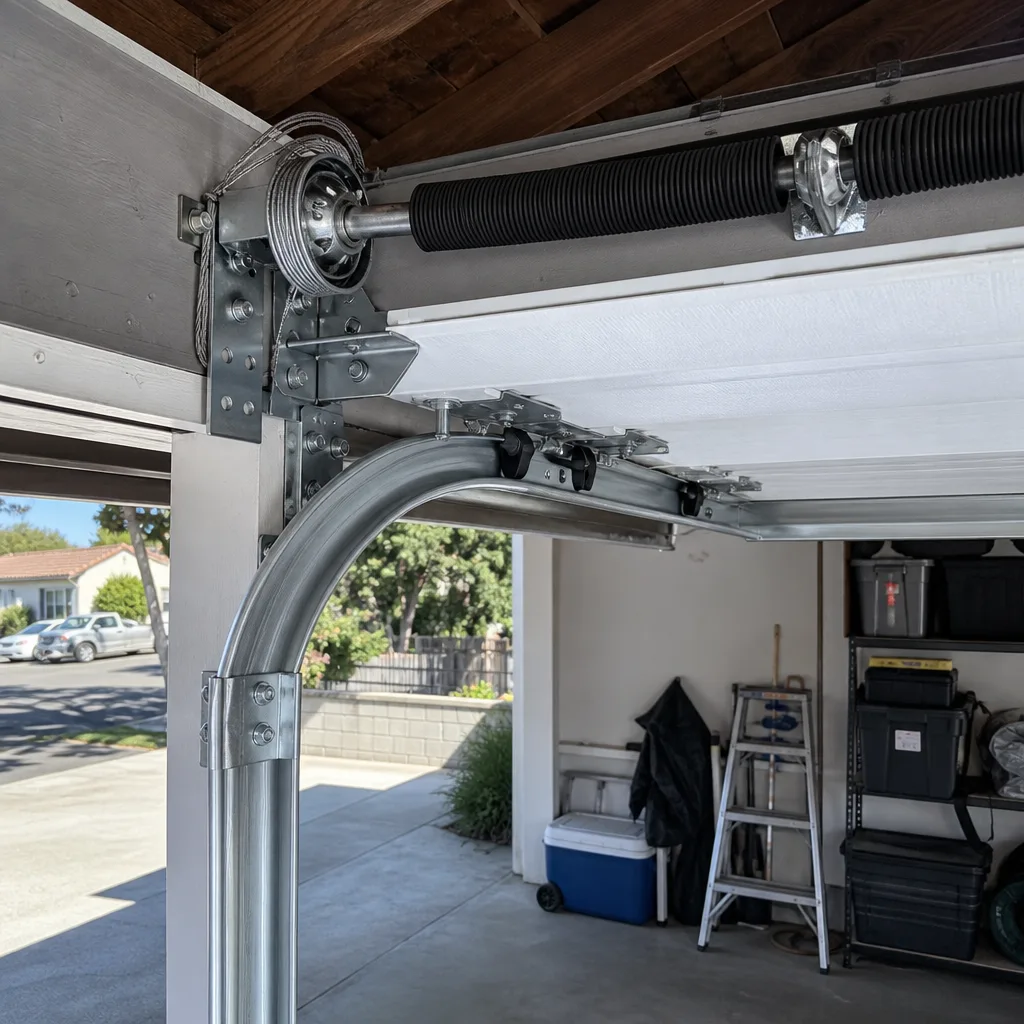 After
AfterCommon Mistakes to Avoid
- Operating the door after a spring breaks. When a torsion spring fails and you keep using the door anyway, you’re adding hundreds of dollars in secondary damage to a repair that would have been a few hundred dollars on its own. Bend the top panel and you’re into a $400+ fix. Stop using the door and make the call.
- Lubricating a noisy door without fixing the underlying cause. A spray of WD-40 quietens a failing roller for a week, then the noise comes back worse because you’ve masked the symptom and kept running on a failing part. Grease the rollers that can be greased, replace the ones that can’t.
- Ignoring a frayed cable because “it’s still holding.” Strand separation means the cable is failing. It will not heal. It will not stabilize. It will break, and the failure is unpredictable. Cables are cheap. Dropped doors are not.
- Assuming a crooked door gap means a new door is needed. The most common cause is a worn bottom seal, which is a $75 – $125 fix. Check the seal before you spend money replacing an entire door.
- Replacing the opener before checking the spring. If a door has been slowly getting heavier and the opener finally gives up, the spring was probably the original problem. A new opener installed on a door with a weakened spring will fail prematurely. Fix the door first, then the opener.
- Putting off a track realignment. A track that’s slightly off will wear rollers unevenly, then compound into a bigger track problem. Straighten the track when you first notice the shudder.
When to Call a Professional
Call a professional the same day if you hear a loud bang from the garage, see visible cable strand separation, or have a door that won’t move despite the opener running. These are active failure situations and every day of continued use increases the repair cost and the safety risk. You should also call if your door is getting progressively slower with no obvious explanation, or if the door jerks and shudders to the point where you can hear it from inside the house. For everything else on this list, get on a technician’s schedule within the week. You can also explore more guides & resources to stay ahead of common problems. Bramwell Garage Doors Los Angeles offers free estimates in Los Angeles. Call (213) 996-0290 and you’ll speak with a live person, get an arrival window, and receive a written price before any work begins.
Frequently Asked Questions
Most garage door repairs in Los Angeles run between $95 and $340, with spring replacements on the higher end and roller or seal replacements on the lower end. The typical torsion spring replacement costs $220 – $340 parts and labor included, and most other common repairs like roller replacement or track realignment come in under $200. Call (213) 996-0290 for an exact quote on your specific issue. Estimates are free.
Yes. Most spring replacements, cable repairs, and roller replacements are completed same-day by Los Angeles garage door companies. At Bramwell, when you call we give you a real arrival window, and the technician arrives with a stocked truck that carries the most commonly needed parts. Call (213) 996-0290 and we’ll confirm our current availability.
You’ll usually hear a loud bang from inside the garage, and the door will refuse to lift, or lift only a few inches before stopping. Look at the torsion tube above the door; a visible gap in the coil means the spring has separated. If the door feels like dead weight when you try to lift it manually, the spring is almost certainly broken. Do not operate the door. Call a professional.
The slow door itself isn’t an immediate danger, but it’s a warning of a spring that’s losing tension, and that will eventually fail. A door that moves slowly is also putting excessive strain on the opener motor, which can shorten its lifespan by months or years. It’s a repair that’s cheaper to address at the slow-door stage than after the spring breaks.
Most modern torsion springs are rated for 10,000 cycles, which translates to roughly 7 to 10 years for a Los Angeles homeowner with average use. Coastal areas with salt air can slightly reduce that lifespan by accelerating corrosion, and older single-spring systems installed before 1990 typically have shorter effective lifespans because the spring carries the full load alone. If you can’t remember when your springs were last replaced, a tension check is worth scheduling.
Not with a written-price company. At Bramwell, the technician presents a written price before any work starts, and the number on the invoice matches the number on the written quote. If additional work is needed beyond the original scope, you’ll get a separate written quote before anything else happens. The policy is part of the Kingswell standard: say the price before the work, no exceptions.
The Bottom Line
Garage doors in Los Angeles fail slowly before they fail completely, and the warning signs are readable if you know what to look for. A slow door means spring trouble. A jerking door means rollers or track. A bang means a broken spring and a same-day call. Frayed cables mean stop using the door. An uneven floor gap is usually a cheap seal fix. Read the signs early and you’ll avoid the 7 a.m. emergency, the damaged car, and the inflated repair bill. If you’re seeing any of the warnings on this page, call (213) 996-0290 for a free estimate. We’ll give you an arrival window, a written price, and a straight answer.
Written by Marcus Ellery, Owner at Bramwell Garage Doors Los Angeles, serving Los Angeles since 2001.