
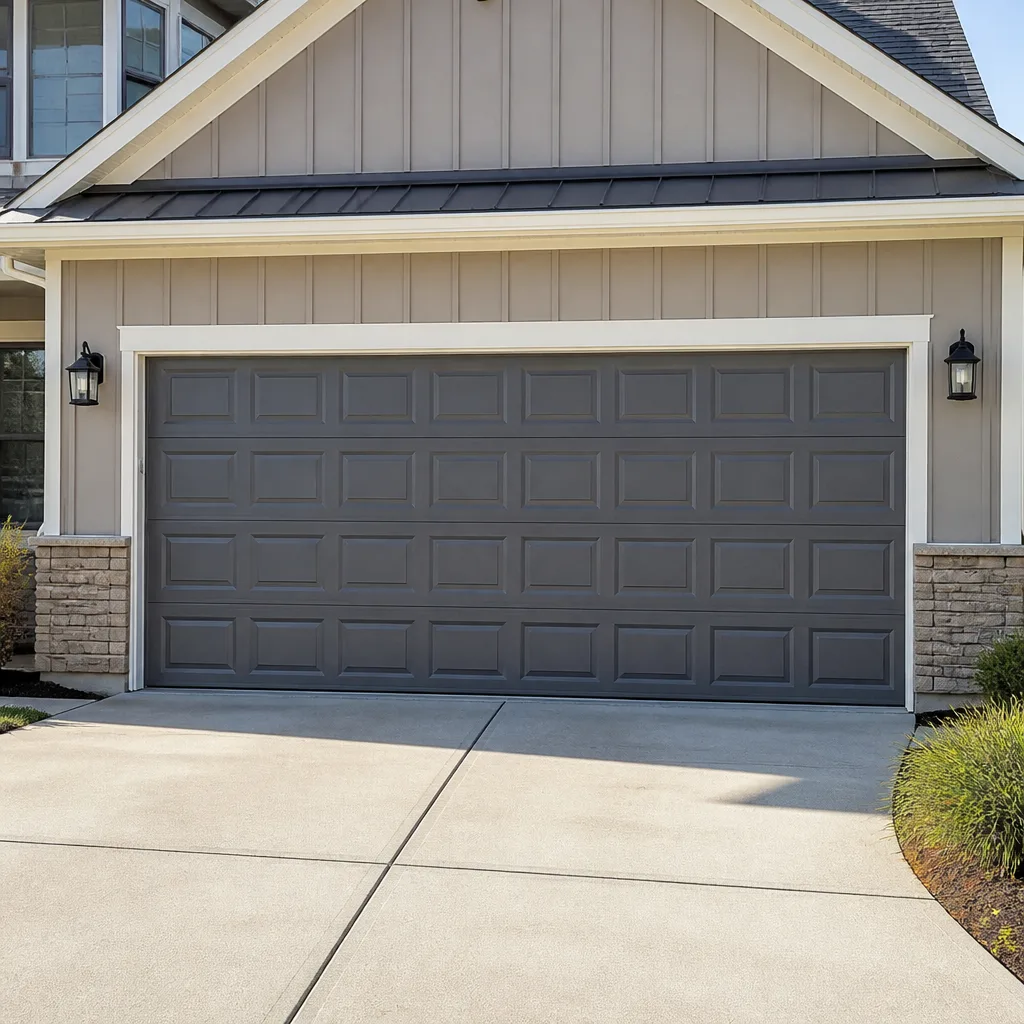
 Raised-panel steel
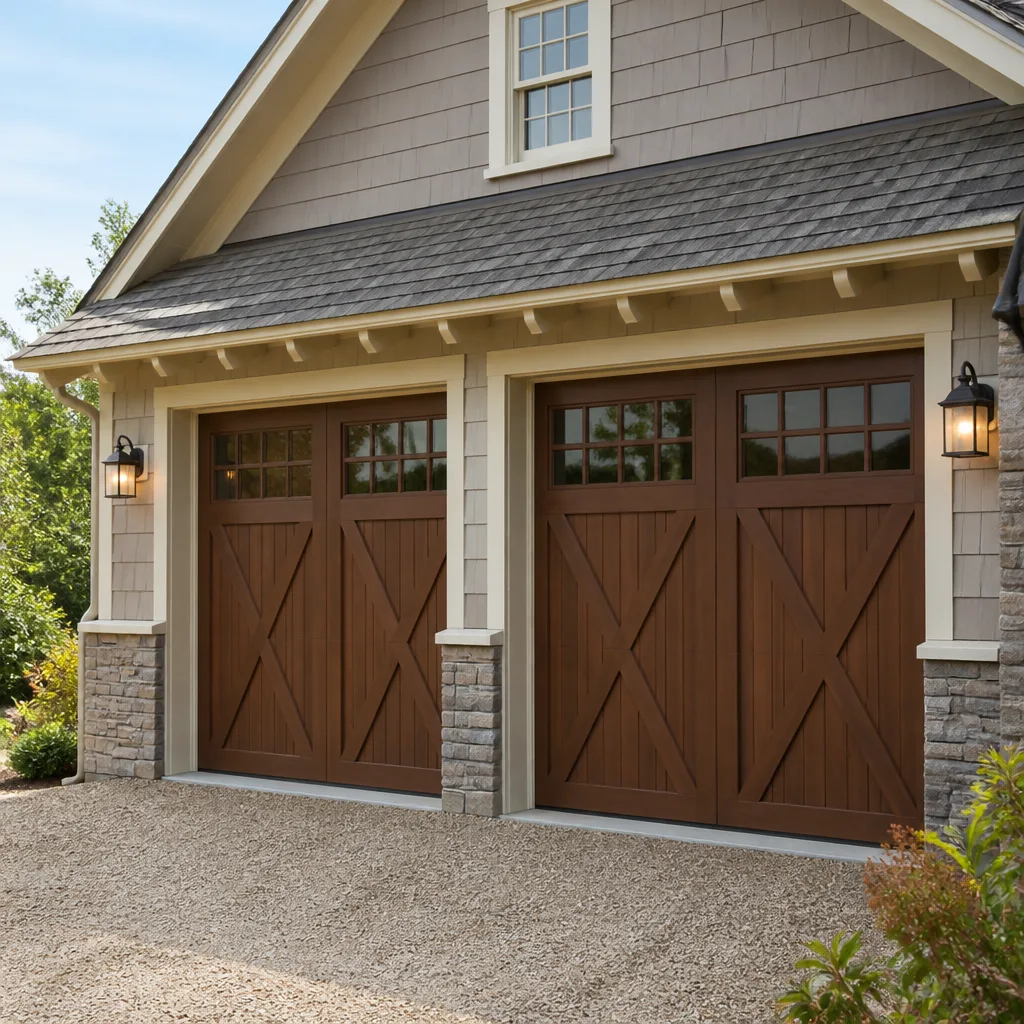 Carriage house
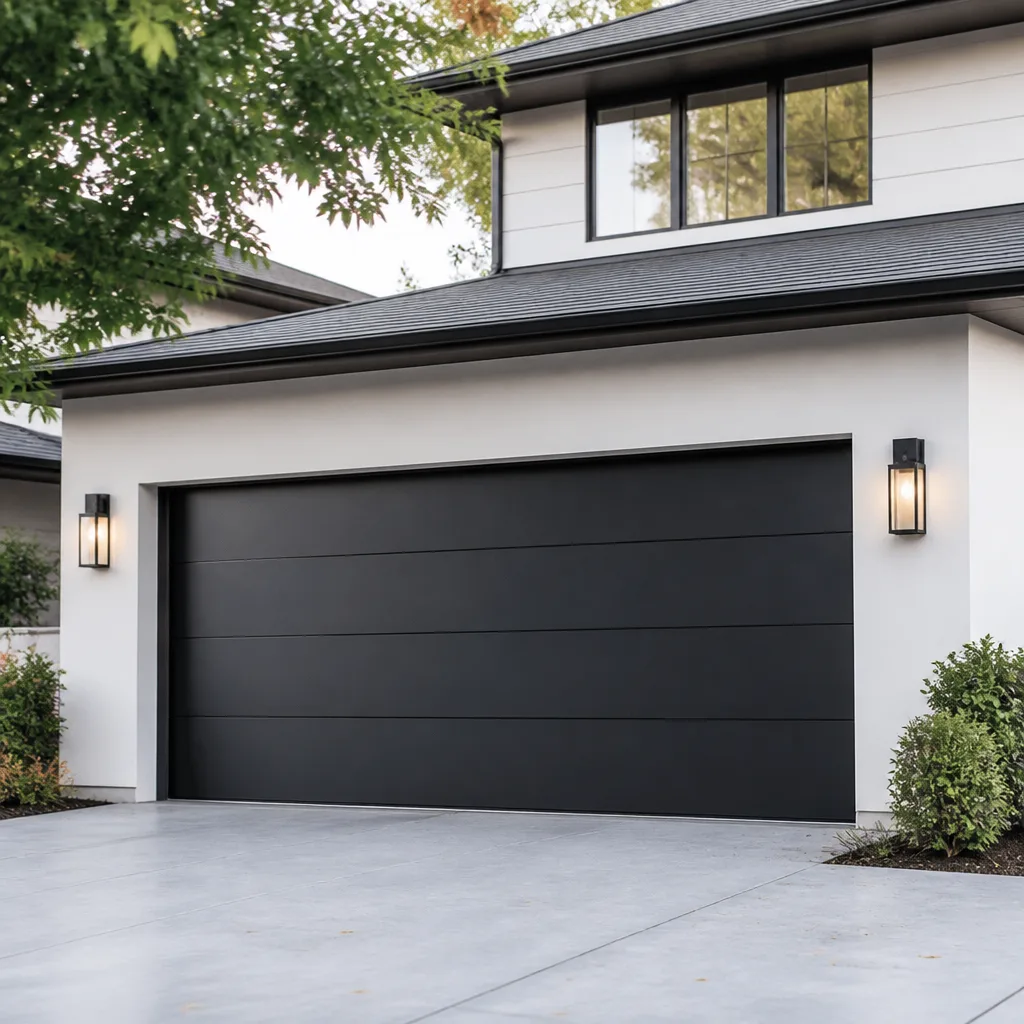 Modern flush
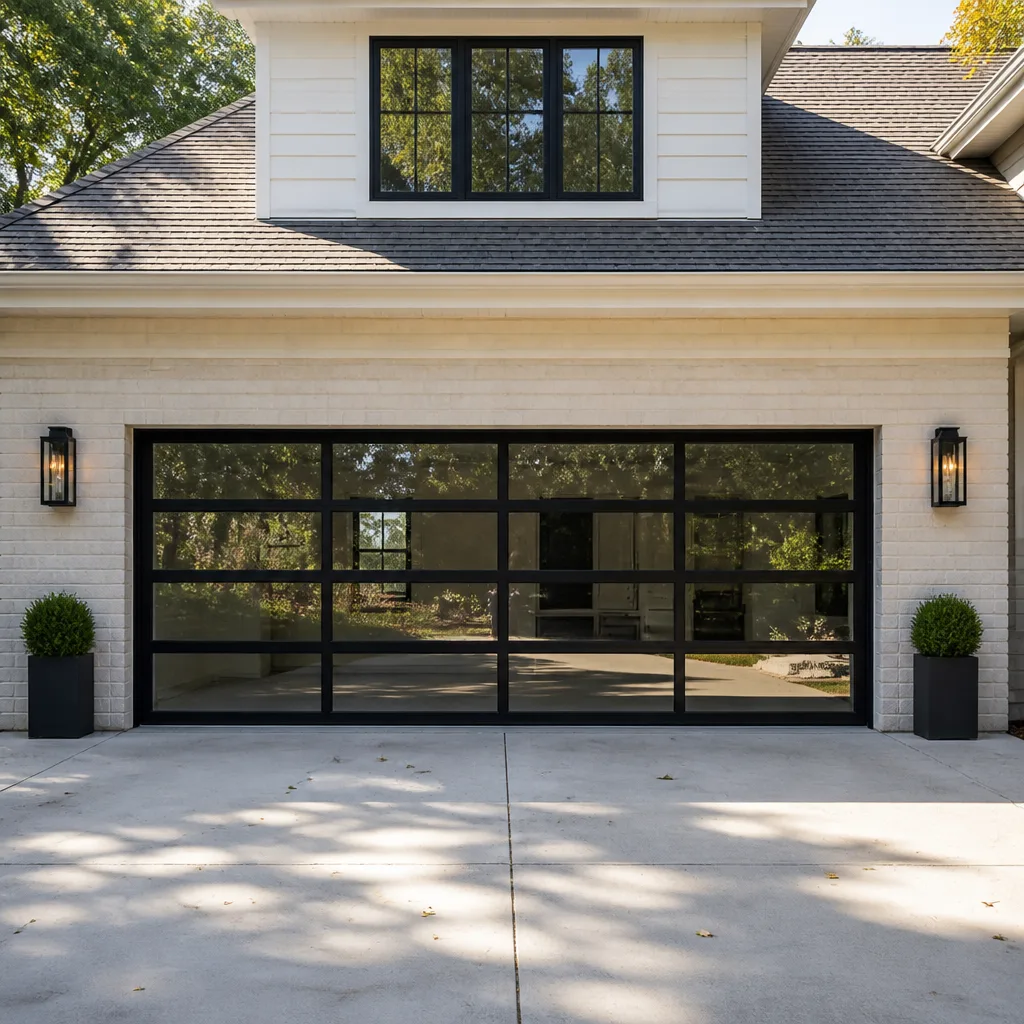 Full-view glass
 LiftMaster openers
 Chamberlain openers
Full 25-point door and opener safety check with every visit - springs, cables, rollers, tracks, and your LiftMaster or Chamberlain opener included
You get a price before we start. It does not change when the truck arrives.
Get your free estimateGenie Roller Replacement: The Los Angeles Owner’s Guide
A Genie roller replacement in Los Angeles typically runs $130 – $260 installed, parts and labor included, and most swaps are done in under an hour once we’re at the door. The rollers are the small wheels that carry the door along its metal track, and when one seizes or cracks, you’ll hear it before you see it: a grinding, chattering, or jerky movement as the door travels. We stock Genie-compatible rollers on the truck, so in most Los Angeles neighborhoods we can show up, diagnose, and finish the replacement in a single visit.
Most homeowners discover the problem on an ordinary morning. The opener runs, but instead of the smooth roll you’re used to, the door shudders halfway up and sounds like a shopping cart with a bad wheel. Sometimes a roller has visibly come apart, with the nylon shell sheared off and the steel bearing riding exposed against the track. Other times the roller looks fine but won’t turn – seized solid from years of heat, grit, and the fine dust that blows through the San Fernando Valley. Either way, the fix is straightforward when the right part goes in the right way.
Which Genie Models This Applies To
The roller itself is not model-specific to the opener, but rather to the door. Genie makes openers – the motor unit on the ceiling – while the rollers live on the door panels below. That’s a distinction worth knowing, because it changes how you buy parts. Any roller made for a standard residential sectional door will work with any Genie opener, whether it’s a ChainMax, StealthDrive, SilentMax, or an older screw-drive unit from the 2000s.
What matters is the roller’s stem length and wheel diameter. Most Los Angeles residential doors take a roller with a 4-inch stem and a 2-inch nylon wheel. If you have a low-headroom track setup or an oddball door, the stem may be shorter or the wheel smaller. The quick way to check: roll the door partially open, look at a roller at eye level, and read the stamped number on the hinge plate holding it. If there’s no stamp, measure the stem from the hinge to the wheel center. A caliper takes the guesswork out, and we carry both 2-inch and 3-inch wheels plus long-stem and short-stem variants so we’re not ordering a $14 part and making you wait a week.
On the OEM versus aftermarket question for Genie rollers: Genie branded roller assemblies exist, but the ones we install most often are quality aftermarket units with sealed ball bearings and a nylon wheel. The nylon shell is quieter than bare steel and gentler on the track, and sealed bearings don’t pull in grit the way open ones do. We’re an independent service provider, not a Genie dealer, so we’re free to use whichever roller outlasts the others. In practice, that usually means the sealed-bearing aftermarket units.
Styles & brands we work with
Signs Your Genie Roller Replacement Is Failing
- A grinding or chattering noise during travel. The wheel is no longer rolling; it’s sliding. The bearing has seized, and every inch of travel is metal dragging on metal.
- The door jerks or hesitates at one specific point. A flat-spotted or cracked wheel catches on the track at the same spot every cycle. You’ll feel it as a hitch in the movement.
- Visible nylon shell damage. Look at the rollers where the door panels hinge. If you see cracks, chips, or bare steel where there used to be a smooth plastic sleeve, the roller is spent and the exposed wheel will start carving into the track.
- The door sits slightly crooked in the opening. One worn-down wheel can’t hold the panel in line, so the whole door tilts a hair off-level and the sections no longer seat flush against the frame.
- Black dust or shavings on the track below a roller. That’s either nylon debris from a disintegrating wheel or metal dust from a seized bearing grinding. Both mean the roller is already past saving.
See the difference
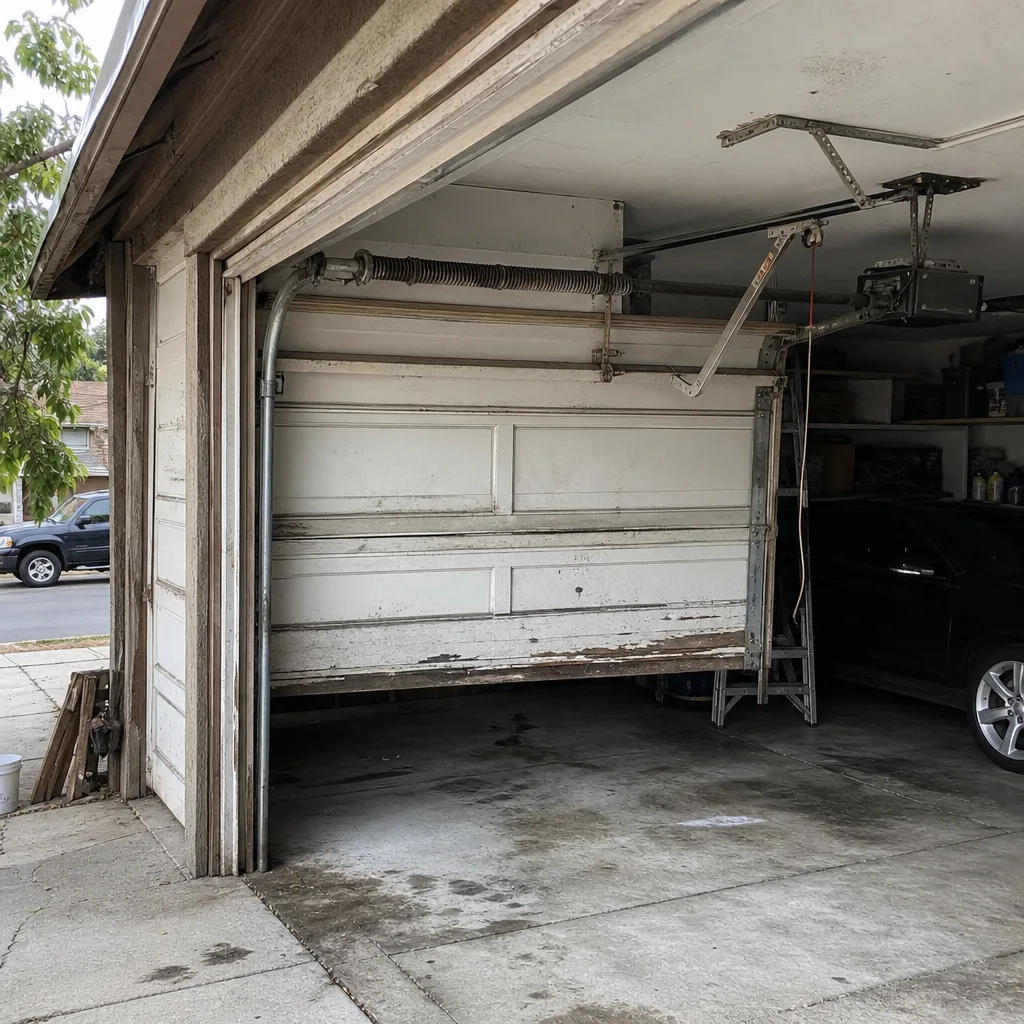 Before
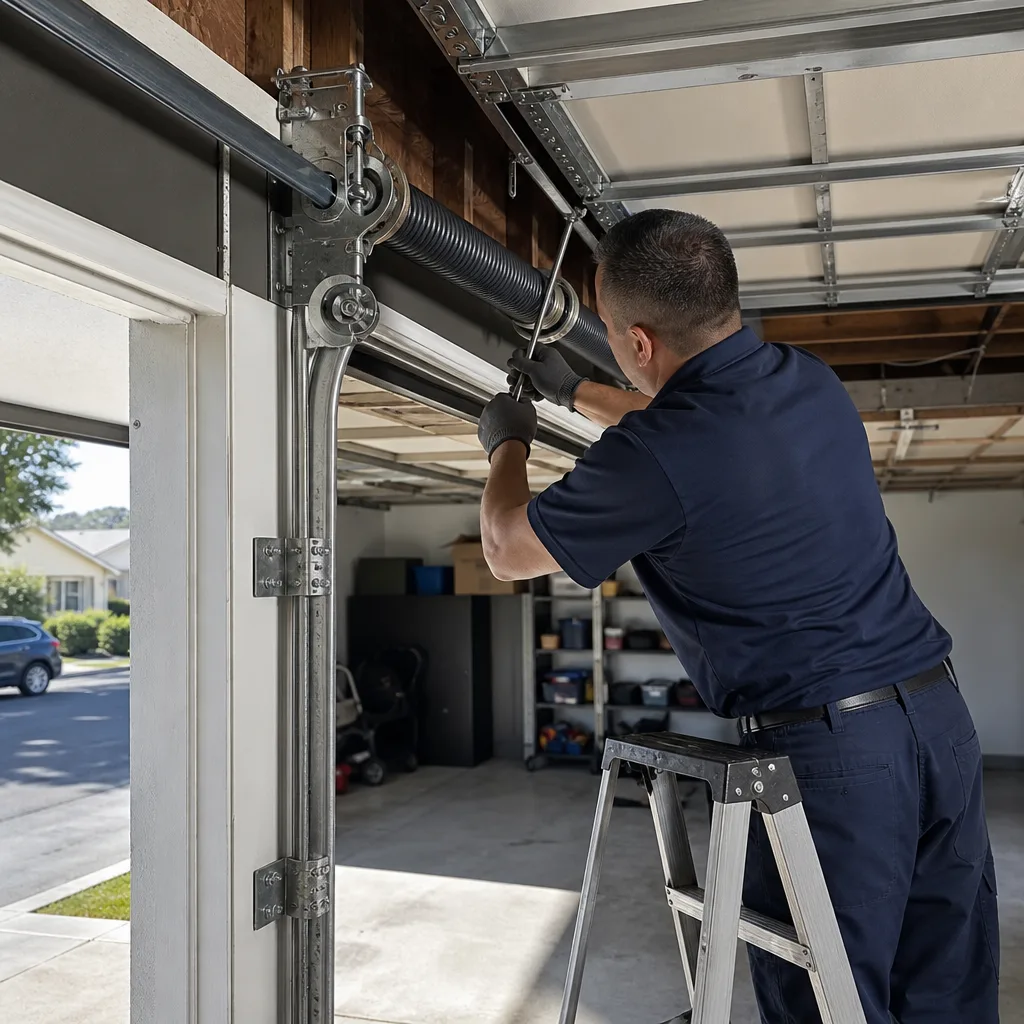 After
After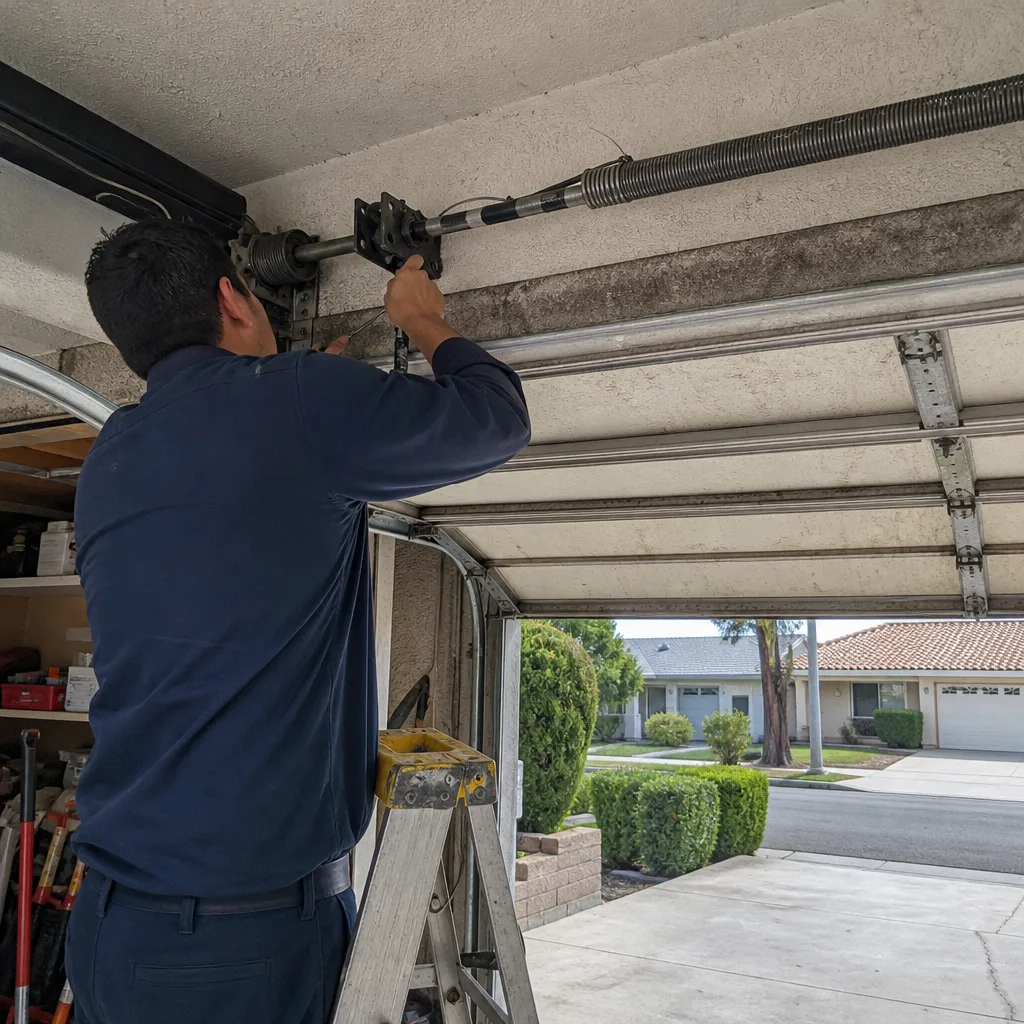 Before
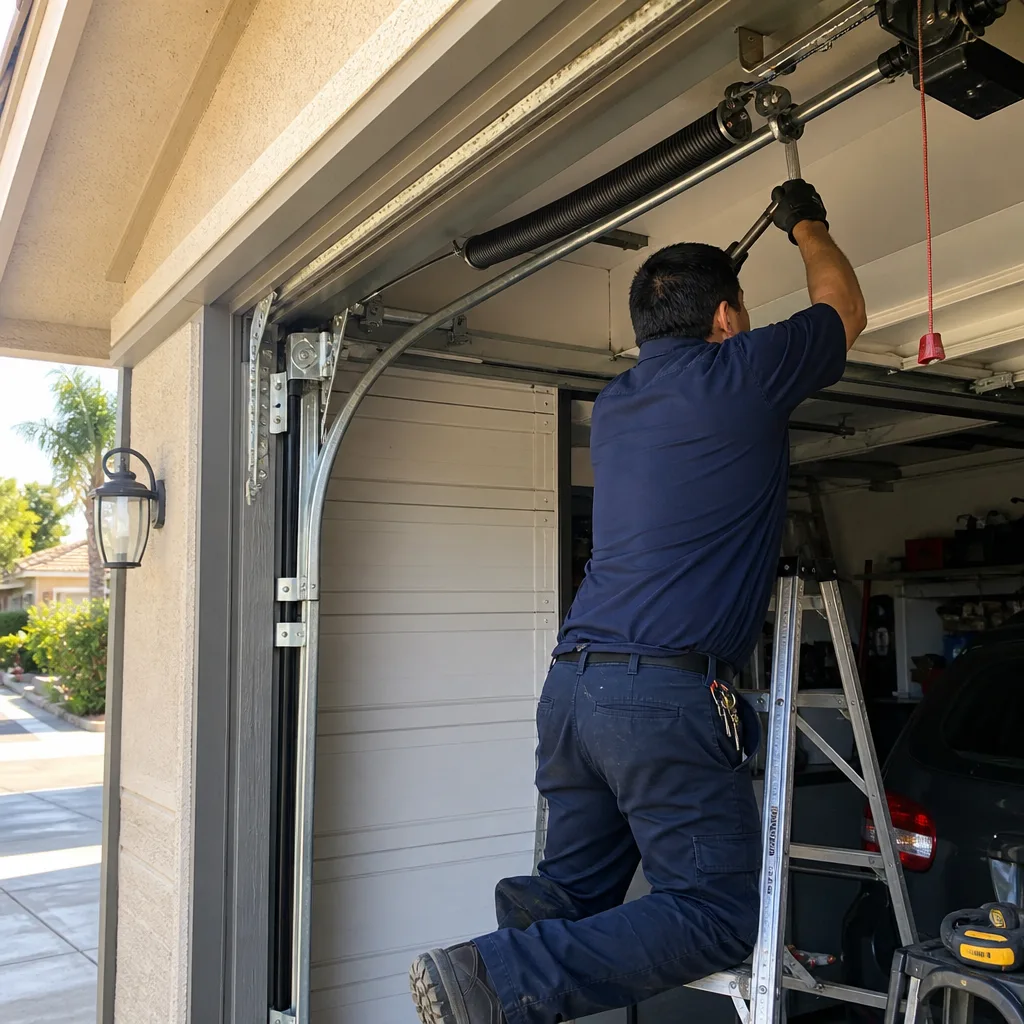 After
After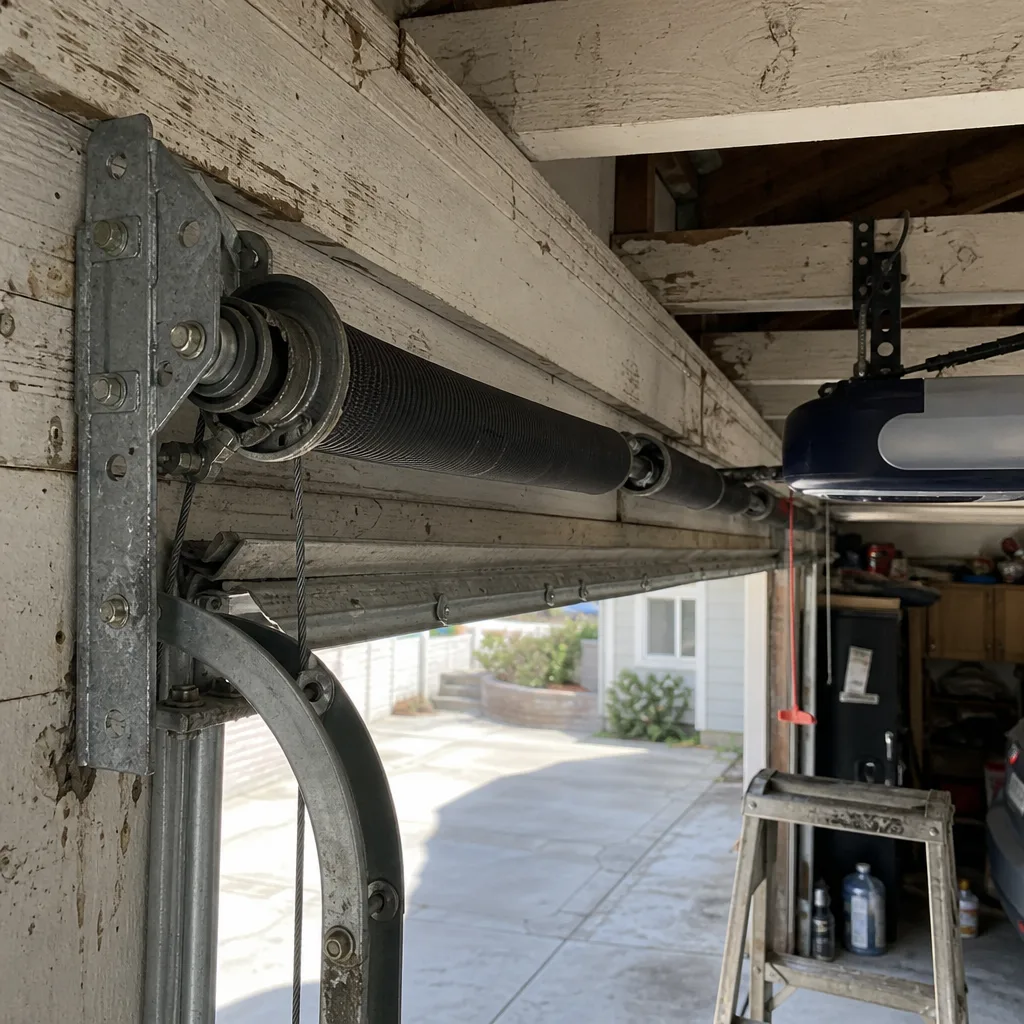 Before
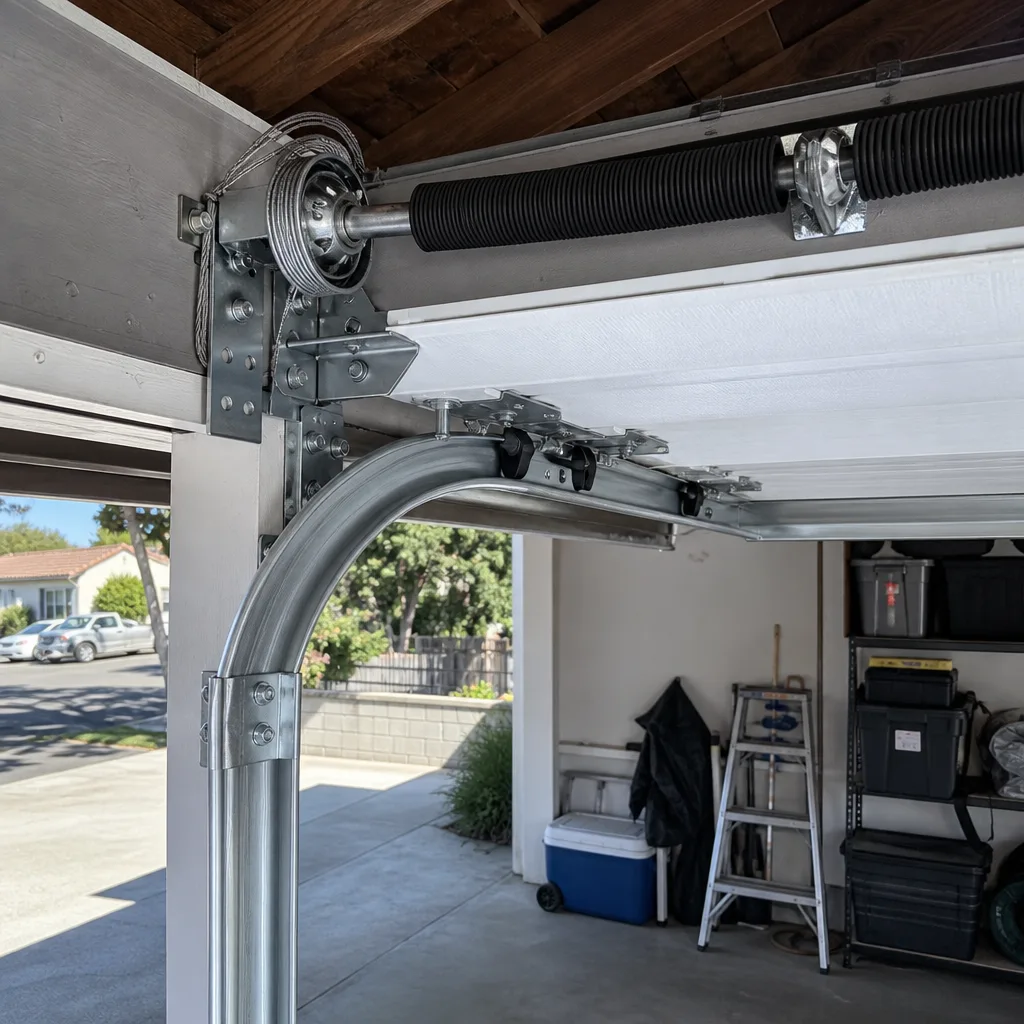 After
AfterReplacement Cost & What’s Included
In Los Angeles, a straightforward roller replacement runs $130 – $260 depending on how many rollers we replace and what’s involved. The lower end covers a single roller swap during a scheduled visit, with most jobs landing around the mid-point when we replace several worn rollers at once. Since a Genie door wears its rollers unevenly – the two rollers on the bottom panel take far more load than the ones up top – we typically replace the bottom pair together and check the rest.
That price is written before any work starts, and it covers the parts and the labor, with no surprises after the fact. The Kingswell standard has been our operating method since 2001: a written price first, a real arrival window, a clean job site when we leave, and a written guarantee on the work. Roller replacements are covered by the 365-Day Done Right Promise. If the roller fails within a year of installation, we come back and make it right at no charge. That promise is on paper, not just said at the door.
Call (213) 996-0290 for a free estimate. You’ll get a real person on the phone, day or night.
DIY or Call Us?
Replacing a roller is one of the safer garage door repairs, but that’s a relative statement. The bottom rollers on a residential door sit under tension, because the lifting cables attach near them. If you yank those rollers out without bracing the door and releasing tension correctly, the panel can drop and the cable can whip loose. We don’t recommend doing the bottom rollers yourself for exactly that reason – the track above the bottom fixture is under load and a homeowner doesn’t always know that until it’s too late.
Top rollers on a standard sectional door are comparatively low-risk: with the door down, the top rollers sit in a removable track section, and some handy homeowners swap them. But here’s the reality of Los Angeles garages after a few years of valley heat and coastal humidity: the hinge bolts are often rusted, the stems are seized in the hinges, and a job that starts as a $20 roller swap turns into a stripped bolt and a ruined hinge plate. By the time you’ve spent the evening with penetrating oil and a breaker bar, the $130 we charge looks different. If you’d rather skip all that, we’re a phone call away at (213) 996-0290, and we’ll give you an honest take on which rollers actually need replacing. Tell me what it’s doing, and I’ll tell you what it needs.
FAQs
The original rollers on a Genie-installed door typically last 7 – 12 years in Los Angeles, with the bottom pair wearing out first because they carry the most weight and roll the most distance. Doors in the San Fernando Valley, where summer heat bakes the nylon and breaks down the plastic faster, often need rollers replaced a year or two sooner than doors in cooler coastal neighborhoods.
No. Once a roller has a seized bearing, a flat-spotted wheel, or a cracked shell, there’s no repair – the part is replaced as a unit. The good news is that a quality sealed-bearing roller is inexpensive enough that rebuilding one would cost more than a new part.
Most roller replacements on a Genie door take 30 – 60 minutes for a pair of bottom rollers, and under two hours if we’re replacing all the rollers on a double-wide door. We run this as a single visit in most cases, with no part ordering needed.
Yes, we stock the most common residential roller sizes – 2-inch and 3-inch nylon wheels, standard and long stems, and both 7/16-inch and 9/32-inch shaft diameters. We’re also authorized to service all major brands including LiftMaster and Chamberlain, so if your door has a mix of parts, we can handle that in one trip. Call (213) 996-0290 for an exact quote – estimates are free, and the price is written before any work starts.
Written by Marcus Ellery, Owner & Lead Technician, Bramwell Garage Doors Los Angeles, serving Los Angeles and nearby areas.